


I — An Age-Old Struggle
“There has to be something you want from life—other than books.”
When someone I cared for deeply said those words to me, I couldn’t immediately tell whether they were being sarcastic or simply honest.
They were not the first person to take my love of literature and make it sound like a limitation.
“Books,” they scoffed.
I remember later writing a sentence that seemed to gather everything I could not say in that moment:
Behind every well-read woman is a younger girl who wandered into a library and never quite came back.
It went further than I expected—shared more than seven hundred times—but what stayed with me was not the reach. It was the recognition. As though something unspoken had finally been given language.
For a long time, I wondered whether I should feel embarrassed by the answer. As though loving books too much were evidence that I had somehow failed to live in the real world.
But I have begun to understand something else as well:
A good library card may be one of the last remaining forms of free access to a larger life. I don’t think we talk about that enough.
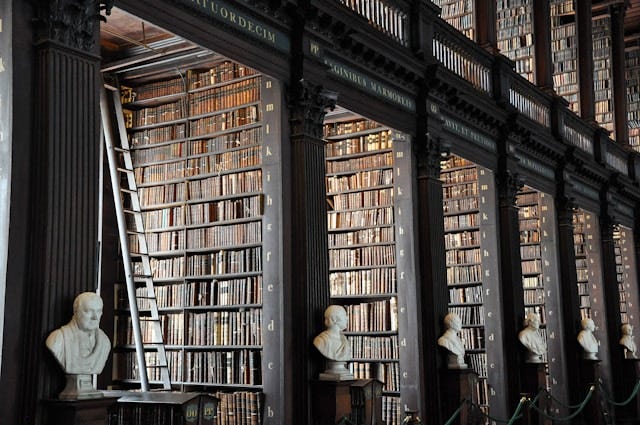
I grieve that so many people who have been close to me have never quite understood what happens to me when I am reading, annotating, thinking about, or reviewing a beautiful book. I know, of course, that everyone has their own passions. Some people come alive in gardens, laboratories, kitchens, concert halls, or mountains. Having felt misunderstood myself, I try not to judge what others love.
But I still grieve.
Because there is so much to be gained from literature.
There is, I truly believe, a book for everyone.
Long before the novel existed, stories shaped civilizations. They were carried in poems, myths, plays, sacred texts, songs, and spoken traditions. They preserved memory. They taught courage. They warned, comforted, questioned, and imagined. Story has always been one of humanity’s oldest ways of understanding itself.
To me, it remains one of our purest forms of magic.
Sometimes I wish I could return to that conversation. Not to win an argument, but to answer more gently than I could in the moment. I have always found that I express myself best on the page.
Perhaps this essay is that answer.
Not to one person, but to many. To every offhand remark that suggested books were somehow separate from life instead of one of the ways we learn to live it.
I am not writing to quarrel.
I am writing to explain a love.
And perhaps, if these pages do what books have always done for me, someone who has forgotten the quiet wonder of reading will find themselves reaching for a book once again.
II — The Girl and Her Books
My grandmother’s favorite photograph of me as a child shows me in her garden, wearing a yellow shirt, reading A Little Princess. I must have been six or seven.
Many grandmothers keep a corner of their home—if not an entire wall—devoted to photographs of their grandchildren. Two of the largest images she kept were of me at one year old, standing beside her bookshelf, and this one: the little girl reading Frances Hodgson Burnett beneath the summer light.
When my grandmother died, I was given the photograph. It now lives on my bookshelf, where I see it often.
I grew up with books.
Some will be tempted, at this point, to say they simply were not given that kind of childhood—as though love of reading were a rare inheritance rather than something cultivated.
But I do not think readers are born.
I think reading is learned, and then remembered.
Growing up among books may make it easier to begin, yes, but what matters more is exposure—those early, ordinary encounters with stories that slowly begin to shape attention, imagination, and curiosity. A child who sees books as part of daily life learns, almost without noticing, that other lives can be entered, briefly and deeply, through language.
Libraries make this possibility universal.
They are one of the quietest forms of equality we have: a place where anyone who wishes can walk in and choose a different world for an hour, a day, or a lifetime. The person who seeks adventure will find it. The person who seeks understanding will find it. The person who does not yet know what they are looking for may still leave changed.
And over time, something begins to happen.
The books are no longer only visited.
They are kept.
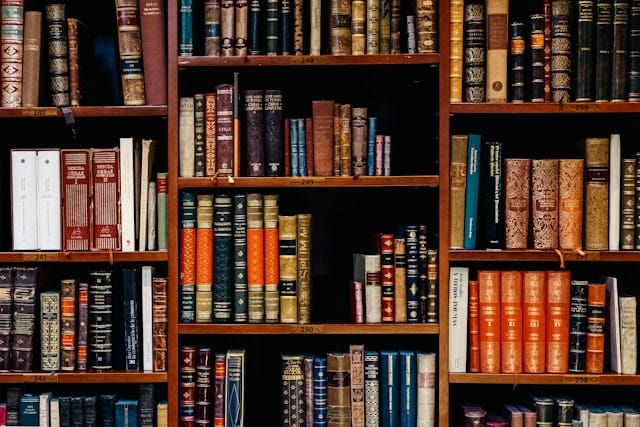
A personal library begins to take shape—not as a collection of achievements, but as a record of encounters. Books that once altered you, steadied you, or returned you to yourself begin to gather on your shelves.
And the girl who once loved books in borrowed places begins, slowly, to build a library of her own.
It makes all the difference.
III — A Tale of Two Libraries
There are, I think, two kinds of libraries in a life.
The first is the one you enter.
The second is the one you build.
For most of my early life, I lived in the first.
It was made of borrowed books—books with stamps on their inside covers, books that belonged to schools and public shelves and other people’s homes. I did not think of them as temporary. I thought of them as infinite. A book, once read, did not feel like something returned; it felt like something absorbed, as if it had simply changed form inside me.
This was the library that raised me.
Quietly, without instruction, it taught me how to pay attention. It taught me that voices on a page could feel more intimate than voices in a room. It taught me that there were other ways to live—other minds to enter and return from altered.
And yet, for a long time, I did not think of it as belonging to me.
Then something shifted.
It happened slowly, the way most important shifts do. A book I could not stop thinking about stayed on my mind long after I returned it. Another was reread so many times that I began to memorize its rhythms. Eventually, I stopped treating books as visits and began treating them as presences.
And so the second library began.
A personal library is not simply a collection of books you own. It is a record of what has stayed with you after reading ended. It is what remains when the borrowed world becomes internal.
At first, it looks accidental. A few shelves. A handful of titles chosen without system or theory. But over time, a pattern begins to appear—not of genre or popularity, but of attachment. You begin to see which books you keep returning to in memory. Which ones you defend in conversation. Which ones you press into other people’s hands because you want them to see what you saw.
A personal library is a kind of autobiography written in spines.
It contains the version of you that loved certain stories at sixteen, and the version that returned to them at twenty-five and found something else waiting there. It holds contradictions without needing to resolve them. It allows you to be multiple selves at once, arranged side by side on a shelf.
And then there is The Tearoom Library.
It is, in one sense, the most public of these libraries. It is written, shared, numbered, and placed into the world where others can walk through it.
But in another sense, it is the most private.
Because what I am really doing, entry by entry, is recording the books that have entered my own internal library and left something behind. Each review is not only an invitation for others to read—it is a trace of a reading that has already changed me.
The Tearoom Library is not a list of recommendations. It is a lived archive.
It sits at the meeting point of the two libraries I have always known: the one I entered as a child without realizing it was shaping me, and the one I have been building ever since, quietly, deliberately, one book at a time.
And perhaps that is what I have been trying to say all along.
That reading is not only a way of passing through other lives.
It is a way of keeping them.
And a library—whether borrowed or built—is simply the shape that keeping takes.
IV — Happily Ever After
I can’t speak for everyone, of course. But I have never read because I wanted to appear clever, or because I imagined books could make me somehow better than other people. Long before I began writing reviews here, reading was simply the place I returned to when I wanted to think more deeply, to grow quietly, or to disappear into another world for a while.
I read because curiosity has always felt like one of the happiest ways to spend a life. Sometimes that curiosity leads me through the lives of American presidents. Sometimes into the watercolours and letters of Beatrix Potter. Sometimes toward the reading habits of remarkable women, or the forgotten histories tucked into the corners of old biographies. Books allow one fascination to lead naturally into another, until an ordinary afternoon becomes an unexpected journey.
For much of history, large personal libraries belonged mostly to the wealthy. To own hundreds or thousands of books was a privilege reserved for the few. I was fortunate to be born at a time when public libraries exist, second-hand bookshops thrive, and beautiful books are within reach of ordinary readers. It feels like one of the quiet miracles of modern life.
I am not wealthy by most measures. But when I stand before my shelves, I feel rich in another sense.
I see conversations waiting to happen. I see ideas I have not yet followed to their end. I see the beginnings of essays that have not yet been written and stories I have not yet discovered. Every shelf reminds me that there is still more to learn, more to wonder about, more to love.
And then I notice the photograph.
The little girl sitting in my grandmother’s garden, completely absorbed in A Little Princess.
She could not have imagined every book that would follow.
She could not have imagined that one day she would build a library of her own, or write about the books that shaped her, or create a place called The Tearoom where other readers might gather around stories together.
But I like to think she would recognize the woman who kept making room for them.
Perhaps there are things in life more important than books.
Yet books taught me how to pay attention. They taught me that beauty is worth lingering over, that other lives can enlarge our own, and that quiet things often change us most deeply.
The girl who wandered into a library never quite came back.
She built one instead.
So well said. I'm sharing this with my bookclub. Reading is a natural escape but it gives us so much more than that.
Thank you for sharing how books have kept you company from your childhood until now. I'm sorry you've had people who weren't supportive of your love for reading, and also so glad you stuck to it!