


What makes a character powerful?
My literary journey of 2026 has introduced me to many brave women in fiction.
I’ve come across female protagonists whose characteristics and goals captured my imagination. Even their flaws have the potential to become their saving grace—the thing that etches them forever in my bookish memory.
What are the signs of a powerful female character? I cannot pretend to have the answer to this question. Of all the great books in existence, I’ve read just a few. My ventures into books have exposed me to souls whose struggles are universal and goals, impressive.
Thus far, five women from books I’ve visited (and revisited) have become significant in my personal literary canon. They all possess admirable traits, as well as struggles I can relate to.
This list will grow as I continue to step outside of my comfort zone—this year, and in years to come.
Agnes from Hamnet
Maggie O’Farrell’s Hamnet has had a remarkable year. With the release of its popular film adaptation, many readers have reached for this book who might not otherwise have expressed interest in it.
While the book, like all pieces of art, will encounter criticism, I loved it the first time. On my reread, I was reminded of why.
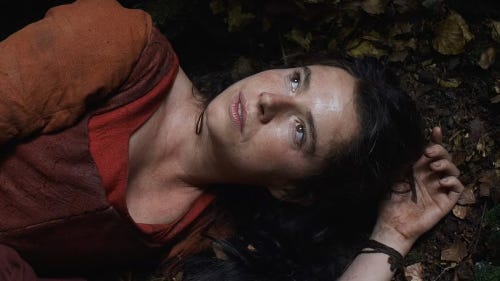
Agnes, the main character, is unlike any other female protagonist I’ve encountered. At heart, she is a wild thing—more wood nymph than human—and it is this quality that causes the poet in the novel to fall in love with her.
But her most powerful moments are those in which she is not a wood nymph, but a mother: when her family is threatened and ultimately devastated by the plague, and her grief is so profound that she becomes listless—for a time, only a shell of herself—once able to heal others, now unable to help herself.
Agnes shows us that we may have a healing touch for the rest of the world, but that does not make us unbreakable. As humans, we will all experience moments when we need others to care for us. Our weakness allows others to show their strength. In this way, we heal one another, even in the face of the gravest adversities.

Griet from Girl with a Pearl Earring
Like Agnes, Griet from Girl with a Pearl Earring is not a conventional woman of her time.
Born into a struggling family in the Netherlands during the time of the plague, she is expected to learn housekeeping and eventually marry. Yet she possesses a unique gift: the artist’s eye. She knows how to arrange even chopped vegetables by color so that they resemble works of art.
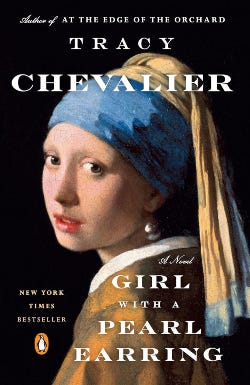
The painter Johannes Vermeer is fascinated by this trait when he meets her. The Vermeers initially seek only a young woman to clean his studio, but arrangements soon change as Griet demonstrates a keen understanding of composition—of color, of light, of seeing. Vermeer eventually makes her his assistant, much to his wife’s dismay.
Griet shows us that we may come from ordinary circumstances, but that does not mean we lack vision—the artistic gift that, when honed, can produce something lasting and beautiful.
Noemí Taboada from Mexican Gothic
Noemí’s story, Mexican Gothic, differs from the others mentioned here. Most comfortably placed in the horror genre, it follows Noemí Taboada—who, at the start of the novel, is a playful and carefree young woman.
Her character transforms throughout the book. She is forced to become more wary, more serious, as she confronts an unknown evil in the home of her recently married cousin, Catalina.
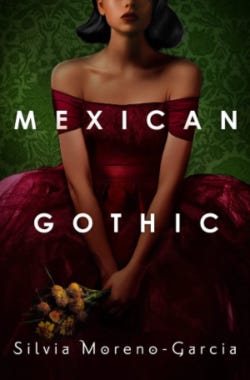
Catalina’s marriage to Virgil Doyle was sudden and surprising to her family. For a long time, she disappeared—until one day, she sent a disturbing letter to her uncle, Noemí’s father. Fearing illness, he sent Noemí to check on her. The truth, however, proved far more sinister.
Noemí shows us that while there is a time for lightness, there also comes a time when we must set aside our own comfort to care for those we love. She reminds us that, no matter how small we may feel, we are capable of courage—especially when we act out of love.
Mae Tuck from Tuck Everlasting
Tuck Everlasting is a children’s book, but when I first read it, I was struck by the quiet goodness of Mae Tuck.
She and her family have been cursed—or perhaps blessed—with eternal life, making them perpetual outsiders. Yet Mae does not allow this fate to make her bitter. She cares for her husband and two sons with selfless devotion, and when a child named Winnie comes close to sharing their fate, Mae offers her comfort and protection.
Of the entire Tuck family, I felt that Mae was the one consistently choosing goodness in each moment.
Mae Tuck is a woman who clings so tightly to gratitude and kindness that one might never guess she feels trapped. She demonstrates that there is always a way to find goodness—and that time spent caring for others is always time well spent.
Emma Woodhouse from Emma
Many Jane Austen readers consider Emma her finest novel. After rereading it this year with closer attention, I realized that Emma is not the arrogant bully I once believed her to be.
Though many of her actions are misguided—and often end in embarrassment—Emma is deeply loyal. Perhaps even to a fault. After her sister Isabella marries, Emma remains at home with her father—a man fearful of food, society, and even fresh air—and devotes herself to his care. She is also loyal to her friends, even if her methods of expressing that loyalty are sometimes misguided. Beneath her mistakes, I see a young woman sincerely trying to do good.
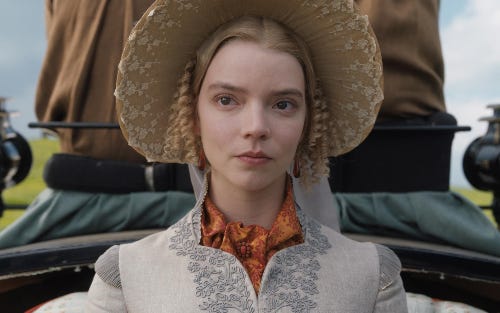
Emma shows us that love and loyalty take many forms. We must be mindful of how we express our care for others—for instance, by resisting the urge to change them, which was one of Emma’s greatest errors.
She also proves that recognizing one’s mistakes and choosing to repent—to swallow pride and offer an apology—may be one of the most powerful demonstrations of self-awareness.

Conclusion
What, then, makes a woman a strong character?
The women in this post are all quite different from one another. Not only are their situations distinct, but so are their passions, motivations, and personal struggles. Yet each of them has earned a lasting place in my heart.
It reminds me that there are many ways to be strong. Strength does not wear a single face. Agnes’s strength revealed itself in her shattering grief after the loss of a child; Mae’s strength was active and steadfast, as she took Winnie under her wing and ensured the child’s safety.
Because strength takes so many forms, we can turn inward and ask: how can I, as an individual, use my own talents and resources to be strong? How can I show love to others, stand against darkness, and fight for my own happy ending?
We may not be able to control the events of our lives, but our responses belong to us. And perhaps that is where our truest strength lies.
Let these women—from some of our most beloved books—serve as examples, models, and quiet inspiration.
Shakespeare’s Sisters: The Women History Almost Forgot

The works of William Shakespeare were crucial in forming English literature as we know it today.
Great article - I think Agnes is probably my favourite!
i loved this article ❤️ emma woodhouse is definitely a favorite when it comes to female protagonists. flawed but strong, indeed!!