


Many of the most striking events in human history are stories of relationships.
These might be relationships between husband and wife, brother and sister, or two friends. They’re tales of many generations banding together to bring necessary change to their families, communities, and more.
Early American history is full of powerful bonds, as far back as the founding of the colonies. In those early years, people moved overseas to unfamiliar land, where they attempted to establish new lives. This country is a result of cooperation—debate, disagreement, and unlikely partnerships.
As part of my reading challenge, I’ve enjoyed learning about bonds shared among the Founding Fathers. The first Presidents of the United States are enjoyable to learn about. They often differed drastically. It was inevitable, since they came from diverse backgrounds. As a result, they possessed different views and priorities.
Their stories would prove that our human longing for freedom could triumph over their differences. During an era wrought with emotion, unlikely friendships would be forged.
As thirteen colonies struggled to unite, so would the lives of the Founders be bound—and, in some cases, their deaths as well.
A Time of No Compromise
They lived during a time of war. Even in times of war, humanity continues to shine through in various ways.
I was sometimes amused to read of humanity that manifested itself during the First and Second Continental Congresses. These intelligent men, the Founders, often resorted to pettiness when disagreement occurred.
It’s not really a surprise. No living person has ever been perfect or possessed a flawless virtue of patience.
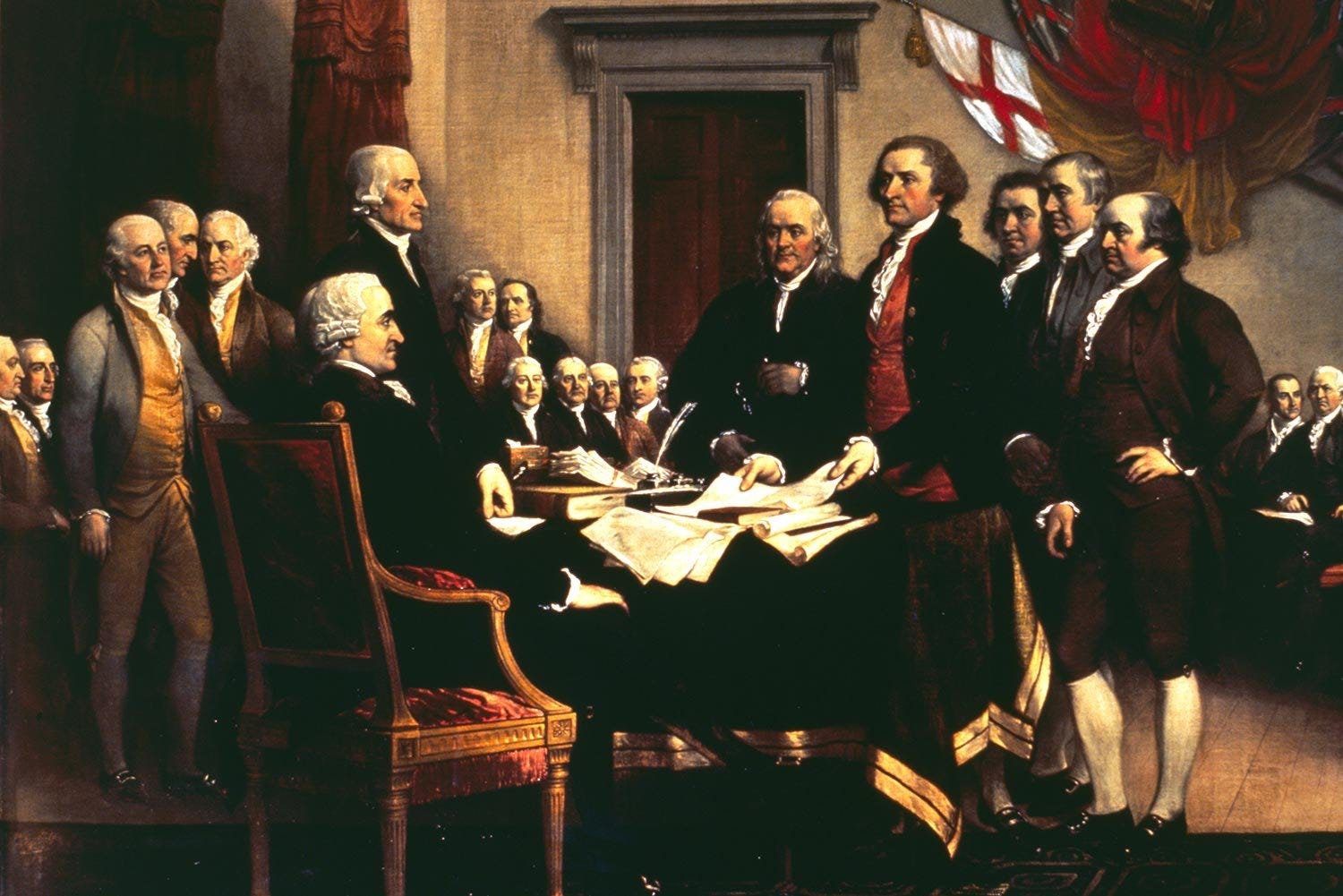
Many Founders squirmed at the thought of compromise when they set about forming a new government.
One of the earliest ‘frenemy’ relationships was that of Thomas Jefferson and John Adams. They disagreed vehemently on the best way to run a government, on how a president should be addressed, and all sorts of minutiae that might seem unimportant now.
These disagreements did not tear them apart. Jefferson and Adams clashed, but the fact that they kept talking (albeit sometimes with years of silence in between exchanges) gives the impression that they did not wish to give up on one another. They were different personalities in pursuit of the same goal. They wished to build a strong nation, and they shared a profound love for that nation.
Jefferson and Adams would grow closer in the latter years of their lives. The letters they exchanged survive, published, for us to read. They record one of the lengthiest, debates in history: two of the finest minds of their time were exploring powerful ideas.
Undying Loyalty
Thomas Jefferson formed a different sort of friendship with James Madison. They got along quite well much earlier in the story. While Jefferson and Adams had their best ‘chats’ in their elderly years, Jefferson and Madison were there for one another in their youth.
In her book James Madison, Lynne Cheney recounts their budding friendship. Things they agreed on included the need for freedom of religion. They discussed their various illnesses (from headaches to stomach problems). When Jefferson went to France to serve as the American minister, they kept in touch, exchanging letters in which they discussed the politics of the day.
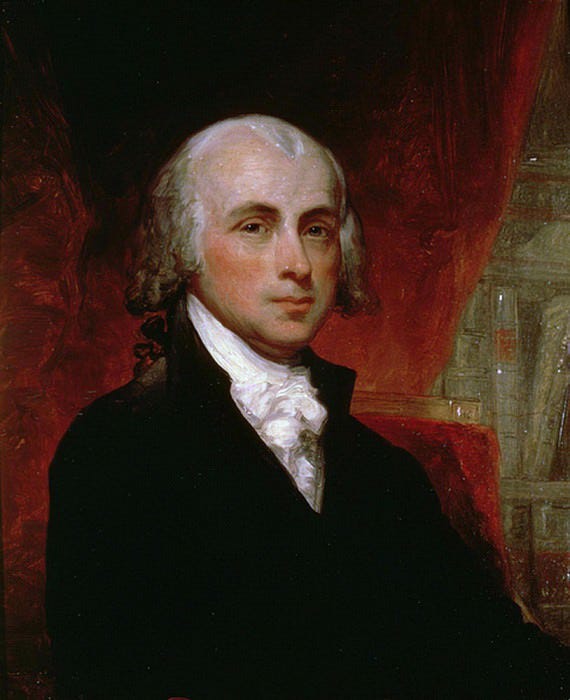
Most endearing to me was their shared love for literature. They often discussed titles that they both read, usually on the topics of philosophy and politics. Their interactions made me smile, for they read like the exchanges of brothers, rather than friends.
Jefferson trusted Madison so profoundly that he asked him to “take care of him when he died”—to protect his legacy when he was no longer present to defend himself. In the 1830s, Madison would do as asked. He was fiercely protective of his late friend’s reputation when secessionists attempted to twist Jefferson’s words for their benefit.
Joseph J. Ellis wrote in American Sphinx:
No one could challenge Madison’s claim that he knew Jefferson better than any man alive, and he expressed his clear conviction that “the charges against Mr. Jefferson,” meaning the claims on his patrimony by secessionists and resolute states’ righters, “can be duly refuted.” … Coming as it did from Jefferson’s closest confidant, who was also a Virginian with impeccable credentials as a defender of southern interests, Madison’s insistence that Jefferson not be taken literally as a supporter of secession was both plausible and compelling.
A Language of Friendship
When Jefferson accepted the offer to become American minister in Paris, he and Madison worried that their letters might be intercepted by the enemy. To take precautions, they agreed to write in an code.
Cheney offers examples of this code:
Madison commented on correspondence recently received by Congress “from 503.12.13.1” (Mr. Adams) and noted that it had mainly served as a “274.3 of 407.36.845.15,” or “display of his vanity.” Jefferson commented on Adams’s ill temper, noting that he hated “367.4.483.30” (Franklin), “25.427.6” (Jay), “816.27.1006.39” (the French), and “816.27.1004.1” (the English). “To whom will he adhere?”
They would support one another through times and grief—such as when Jefferson’s wife, Martha, died. So great was his grief that friends began to worry he had lost the desire to live. In turn, Madison confided in Jefferson about his epilepsy, as well as many things that he had lost because of that taboo condition.
They could trust one another to hear grievances without judgment. Such friendships are rare today.
Friendship in the Last Breath
Even ‘frenemies’ did not forget one another in their final moments.
Famously, John Adams and Thomas Jefferson died on the same day—July 4, 1826. Not only was it Independence Day, but it was an important one: this was the fiftieth anniversary of the signing of the Declaration of Independence.
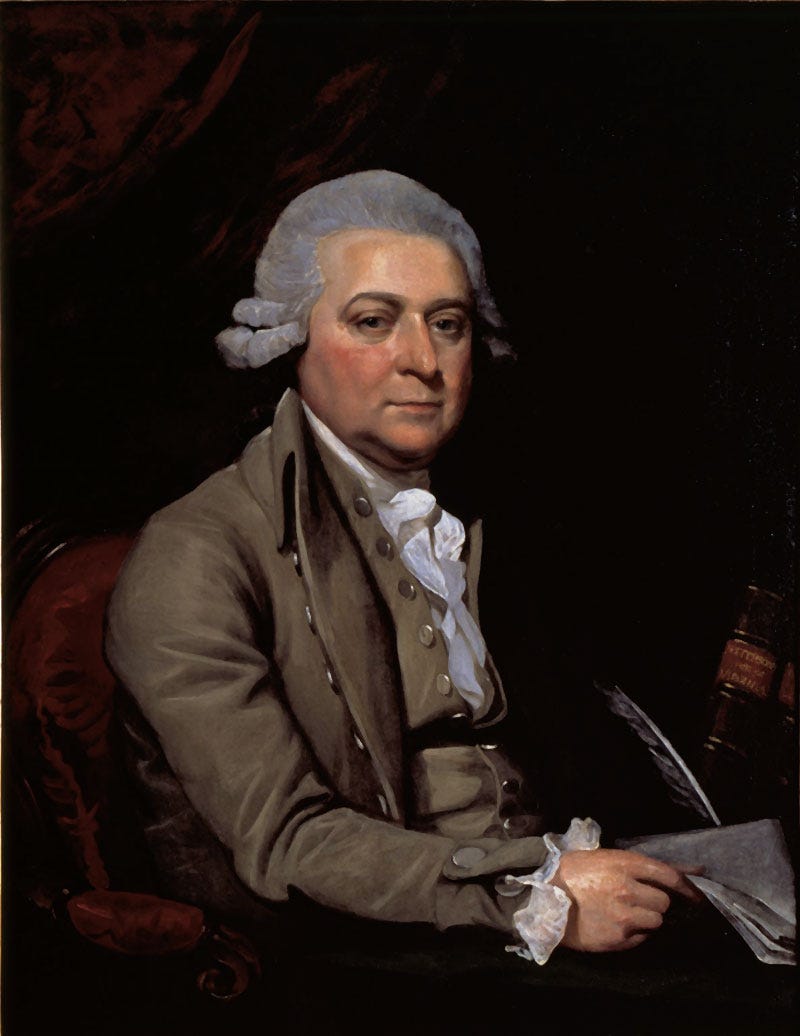
Both men had been asked to attend a Fourth of July celebration in Washington. Both men declined, knowing that they were too old to make the journey, perhaps sensing their time was running out.
In John Adams, David McCullough pulls us back to the joy felt by Adams in his final moments:
Early on the morning of Tuesday, July 4, … Adams lay in bed with his eyes closed, breathing with great difficulty.
A letter was sent to his son, John Quincy, informing him that his father was sinking rapidly, and:
As efforts were made to give Adams more comfort, by changing his position, he awakened. Told that it was the Fourth, he answered clearly, “It is a great day. It is a good day.”
Then, the final breath:
Adams lay peacefully, his mind clear, by all signs. Then late in the afternoon, according to several who were present in the room, he stirred and whispered clearly enough to be understood, “Thomas Jefferson survives.”
As two of the honored Fathers of the Nation, they had confided in one another—debating and arguing. These arguments did not sever the fondness they shared for one another.
Jefferson had already died that morning when Adams, unaware, honored him with his final words.
Friendship that Strengthens Nations
Instances of the Founders’ arguments can teach us much about forming communities. The minds which shaped our nation were brilliant—and human. While they were masters of politics and philosophy, they still benefited from connection with other humans.
Discussion might grow heated. In that heat, a nation was formed. Iron sharpens iron. Friendship is necessary to keep people strong in troubled times. We might not all be politicians or leaders, but we can learn from the Founders.
They teach us to work with others to achieve our goals. They prove that healthy discussion can occur without shattering friendships. They reassure us that confiding in friends about our troubles is not a sign of weakness. Frustration and hopelessness are things all humans feel.
America was established on debate and friendship. Have we lost sight of the value of these things? Perhaps we should go back and ponder how important minds learned to argue without becoming caught in hate. They disagreed, yet cared for one another in their final moments.
Disagreement doesn’t have to mean hatred, and we would all do well to remember this.
What do you think about the Founders and their friendships? I would love to hear from you!
Martha Washington, the First Founding Mother

We observe history from valuable angles by focusing on ladies who lived through it. Where did they stand during crucial events? How did changes affect them?
You've chosen the most interesting relationships to discuss. It's impossible not to be fascinated by the Jefferson-Adams reconciliation. Bitter rivals in their youth, and especially when TJ was undermining the Washington Administration that he was a part of. Adams still wanted to argue about politics and Jefferson only played along a little. There was affection and respect near the end, but even then Jefferson in particular was more intimate with others. Probably that was wise considering that their politics would remain opposed. What I liked most about this was the idea that older men trying to find peace and commonality, rather than the passion of their youth. Ellis, who may be my favorite historian, writes about this in "The Friendship" chapter of his Pulitzer Prize winning The Founding Brothers. I think their reconciliation bests supports your theme of the importance of friendship.
I always thought of Madison as the Jefferson whisperer, an ostensibly junior partner who was the wiser Constitutionalist. I'm glad you discussed them, but their relationship seems still a bit elusive to me, probably because I understand Madison the least. Of all the founders, I think Madison has received the least attention in recent years.
I agree with you that confiding in friends is not a sign of weakness. I am currently re-reading "Fears of A Setting Sun: The Disillusionment of America's Founders." In it Dennis Rasmussen recounts how Washington, Hamilton, Jefferson and Adams were very pessimistic about the future of the country in their later years. And there was still feuding and partisanship. But they also had friends that they wrote to for support. I think this supports your theory that the founders looked to their friends for support, even when they had differences. Madison, by the way, was optimistic.
I knew nothing of James Madison-“boring Founding Father- move on’” I am adding him to my reading list. How in the world did he become president with epilepsy? I our days of IM and cruelty on line can you imagine him being president today? He must have been very brave.