


Find my other articles here at my Table of Contents!
My topic for February was the poet Emily Dickinson. Earlier this month, I finished Lyndall Gordan’s biography of the Dickinson family, Lives Like Loaded Guns, and wrote a review for it, which you can find here.
It was a challenge to summarize the soaring family drama in less than two thousand words. By the end, I understood why Emily’s poems often hit like blows to an adversary—many actually were.
My search for Emily Dickinson has not ended. I still have to read the book My Wars are Laid Away in Books by Isaiah Habegger; it seems more focused on the poet herself. I’ll start it in the next few weeks, and my posts about her will continue.
Hopefully, by the time I finish, I’ll have a better understanding of Emily Dickinson, particularly mysteries such as her illness. While it was likely epilepsy, no one knows for certain.
I sought a palate cleanser for the rest of the month. The chosen book for that was David McCullough’s book John Adams. It’s one of many tomes that have been sitting on my shelf, waiting for attention.
Last year I read a couple of books about George Washington; I even published a post about his mother, Mary Ball Washington, which you can find here.

Our country was built by courageous people who knew what they were sacrificing: comfort, friendships, even their lives. They put these things on the line to pursue what every human craves, freedom.
In history class, we do not tend to learn the small details that make the Founding Fathers and their families human. That’s why, when I find something written by them that could have come from my pen, it’s exciting.
It did not take long to find one of those passages in John Adams, when McCullough quotes from his writing:
I want to see my wife and children every day. I want to see my grass and blossoms and corn….But above all, except the wife and children, I want to see my books.
Any book lover will understand why I found this passage delightful. The love of books and thirst for knowledge has always existed. Certainly, things look different now; many of us read on a Kindle, rather than buying paper copies. Still others enjoy audiobooks.
In Adams’ time, there was only one way to be a reader. Paper books were an investment. Today, we can get used paperbacks for a few cents; back then, books were considered a rich man’s object.
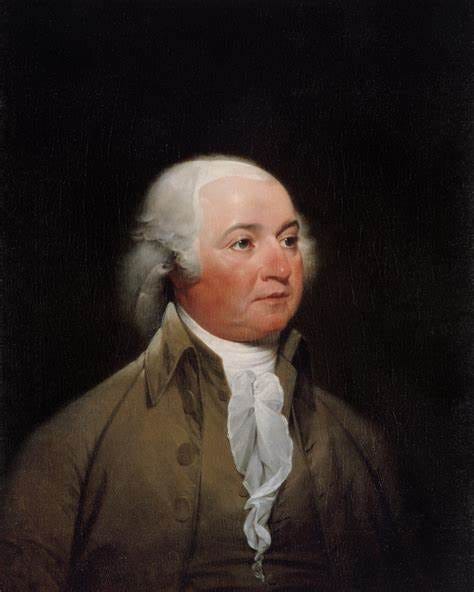
When John Adams wrote about longing to see his books, it was 1768. He wrote these words after the dreaded Stamp Act, when the American Revolution was still an idea that had not gained full, dramatic traction. A lawyer by trade, he seems to have written those words while away on business.
John Adams went to school, but he also took great personal lengths to educate himself. Even in times of unrest, historic figures managed to invest in their education. A person who wishes to learn can and will find a way.
In Adams’ case, his father sent him to school to become a clergyman. Though his father had good intentions, it soon became evident that John did not have the temperament for that career.
Instead, he took his future into his own hands, deciding as a youth that he wished to study law. He found work to save money for university. He spent hours poring over books on British law, as well as philosophy and history.
He was passionate about all of these things. Later, he would write, ‘The only way to compose myself and collect my thoughts is to set down at my table, place my diary before me, and take my pen into my hand. This apparatus takes off my attention from other subjects. Pen, ink, paper and a sitting posture are great helps to attention and thinking.’
Adams wrote those words shortly after he took on one of his most challenging cases. By then a renowned lawyer, he was asked to defend the British soldiers involved in the Boston Massacre.
It would be an uncomfortable role in his professional life. However, it was by no means the most uncomfortable thing he would do. Challenging the British Empire would put his life, as well as his family’s, in danger.
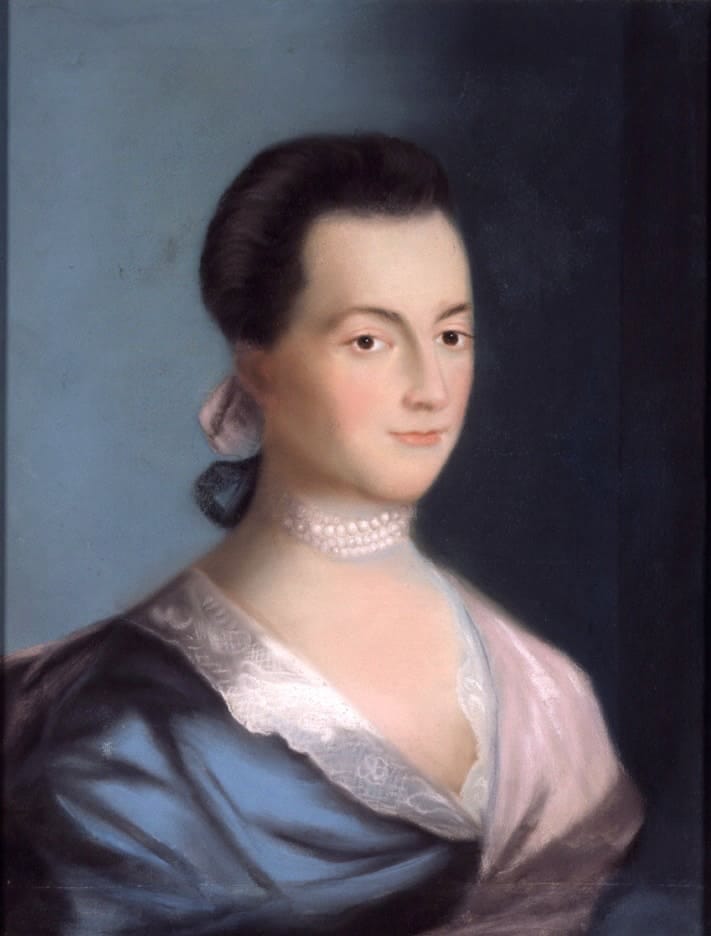
John Adams was well-read, and the woman he married had similar tastes. Abigail Adams, nee Smith, was also self-taught through books. She was unafraid of making her thoughts known.
Books have been written focusing on her, as well as her relationship with her husband. She was vital to John’s success, as he often asked her for advice. Though much of his life was dedicated to revolution, their love was strong enough to survive prolonged separations.
As a child, Abigail’s health had been fragile. Her parents considered her too sickly to attend school; instead, she taught herself. Her father, a renowned clergyman, had a vast collection of books. They were at her disposal, and she made good use of them.
Abigail explored many of the same ideas that John taught himself. It seems to me that they were perfectly matched. What good fortune to meet someone who loves the same books as you!
When war broke out, Abigail would find her own ways to participate, as did many other women. The Revolution is often portrayed as being an event driven by men. While most of the deaths during this time were male soldiers, there was also resistance among their wives and daughters.
Women made their voices heard, even if they had to find more subtle ways to do so. The Edenton Tea Party, which I wrote about here, was one of the first occasions of ladies gathering in protest. They signed their names on a paper, proclaiming allegiance to the cause of independence. Their refusal to buy British tea was a stab felt by British trade.
These ladies proved that there are many ways to say no to one’s superiors; not all of them involve death.
Abigail writes clearly of her perspective in letters to her husband. Revisiting her words, we learn her opinion about every step taken in protest against England. We can sense her fear for John’s safety, as well as the anguish of a wife who spent so much time without her husband.
Abigail wanted her family together. However, she knew that they were to play a special role in the course of history. She understood that sacrifice was needed for the long-term good of her family, and that of all American children.
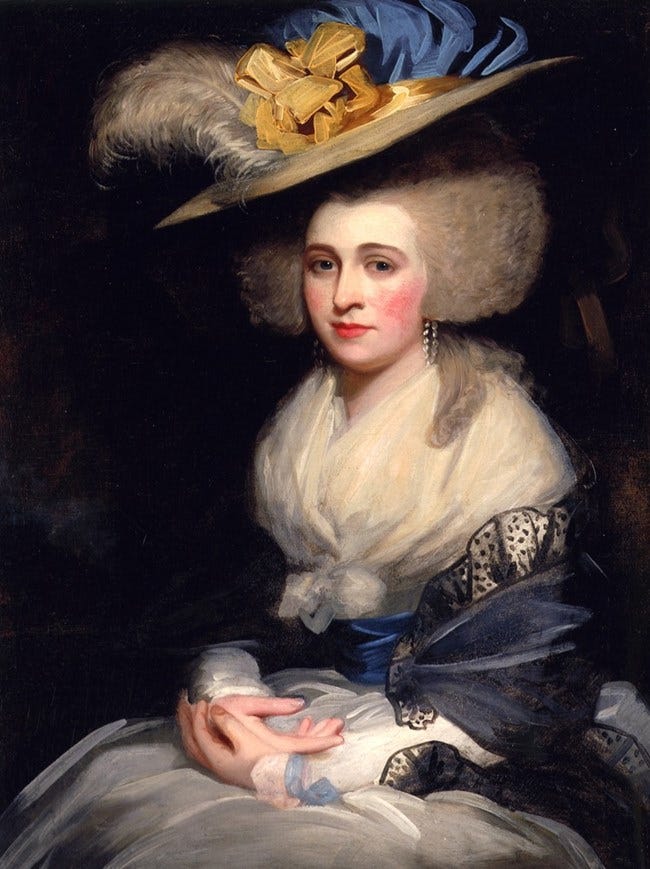
John Adams and his sharp mind were indispensable to the fight for independence. Realizing this, his wife did not ask him to resign. All the same, she was truthful about the effect this distance had on her.
In 1777, she wrote to John: “‘Tis almost 14 years since we were united, but not more than half that time we had the happiness of living together.” This was shortly after she suffered a miscarriage, alone.
Though John had wished to be present for the birth, he was unable to slip away. He was constantly occupied, as Britain continued to send more ships with soldiers.
During this time, George Washington was also seldom home with his family. It was a crucial time for our infant country. Things likely would not have ended well, had these men abandoned their duties.
John Adams might not have been home when Abigail miscarried, but he felt the blow all the same. They had both been eager to welcome a new child. They’d hoped, as well, that it would be a daughter, since they’d recently lost a baby named Susanna to illness.
Crushingly, the child did turn out to be a girl. Abigail suffered greatly, but she still did not ask John to interrupt his work.
To know something is necessary does not make it easy. Abigail considered her husband’s absence to be her sacrifice for the cause of freedom. In the same breath, she called it one of her great misfortunes.
Not long after miscarrying, she would release her son, John Quincy, into the narrative; he would travel with his father on a diplomatic trip to France. She did not know, when letting them go, if she would see them again.
There was much to worry about. The voyage proved to be long and uncomfortable, with John and John Quincy subject to illness, poor weather, and the possibility of attack by British ships.
Though her husband and son survived, she proved her courage in allowing them to go. It would be but the beginning of a long struggle with many fatalities.
I have just started digging into her life, and will write more in the near future.
In our country, much has changed since John and Abigail Adams lived. I am delighted that the love of books, along with its telltale signs, remain the same.
The bookworm’s longing has not changed, regardless of rank or situation. Everyone who’s known the magic of literature will agree. At the end of a long day, we want to return to our personal libraries, losing ourselves in familiar sights and smells.
Most of us do not face challenges on the scale that the Adamses did. We still have this in common with them, though—the appreciation for books, and what they represent.
I have yet to finish John Adams; there is much to be written about him and his family. Today, I needed to take the time and celebrate that, even when it seems like the world is ending, we have family—and we have books. Let us always find hope in those two things.
Please comment with your thoughts and critique! The subject of the American Revolution is full of courage, loss, hope, and joy; I can’t believe that it took me so long to start reading about it!
Louisa May Alcott: “Little Women” Is Born

The Civil War began in 1861 and shook every person living in the country. It was the result of years of political tension, and its many battles resulted in appalling numbers of casualties.