


The year is dipping into crisp autumn nights. As trees become golden and Halloween decor begins to appear, I once again find myself in a mood to bake constantly.
I’m always most inspired to bake things—cookies, cakes, anything sweet—when there’s a chill. I don’t think I’m alone in this—tons of fun recipes emerge in the autumn. These are recipes for pastries, soups and even salads. They’re creative ways to enjoy the taste of the seasonal change.
In spite of this variety, I’m most drawn to the sweet recipes—I can’t think of many people who don’t like cookies! As I bake new varieties, I’m aware that I am using a side hobby to ignore my current WIP. And I find myself wondering, Is there a recipe that would make it easier to start a new story? The thought struck me because I felt bad about my procrastination.
As I mulled over it, I could not help but be interested in the parallels between writing and baking. Creativity takes many forms. Even if the art medium looks different, it involves an artist reaching into their soul to make something new. Creativity will always have similar characteristics. What are the best ingredients to use when beginning a story?
It’s been a while since I’ve read about the individual things that come together to form good narratives, writing theory that beginners often study. I’m not one to enjoy technique books. Perhaps contemplating them will help me gain momentum with the project I’m working on now.
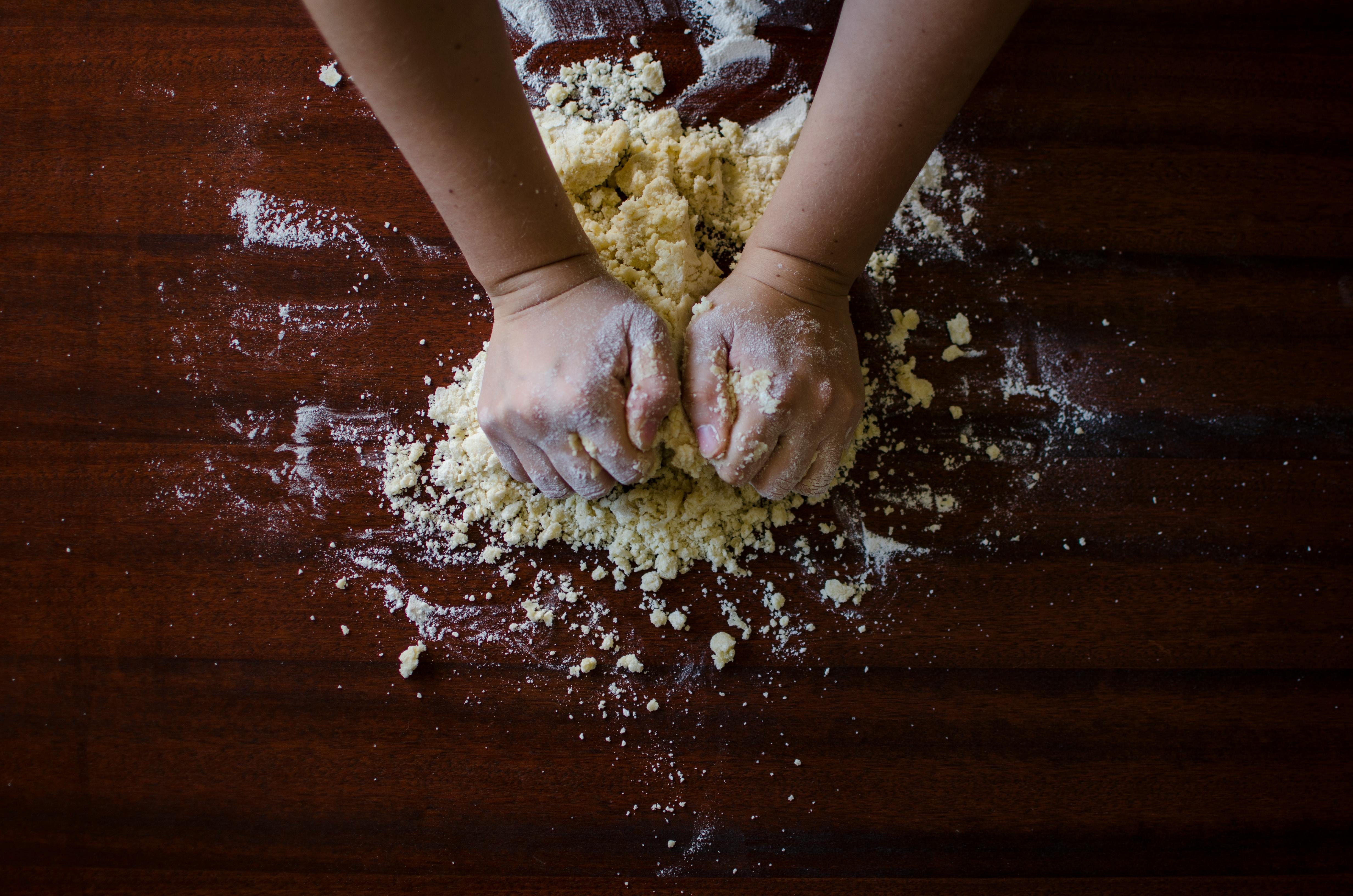
These are my own musings. I enjoyed coming up with them, and decided to write them down and share. They are by no means perfect. They are proof that, when a person loves to write, it will change how they view simple things.
They also reminded me that, just because I prefer one art form, it doesn’t mean I am wasting time when I focus on other things. It comes together in the act of creating, whether the outcome is a new story or a cupcake.
The Three-Ingredient Story
In the world of baking, you can find all kinds of recipes. Some are elaborate, needing many ingredients to ensure pleasing textures and memorable taste. If you don’t have all the most common baking ingredients, there are three-ingredient recipes. A couple of nights ago, I made some simple and tasty three-ingredient sugar cookies—they only needed sugar, flour, and butter.
When it comes to writing, are short stories the equivalent of three-ingredient recipes? I’m judging solely based on length and the amount of plot points. Just as a three-ingredient cookie recipe yields good flavor, the length of a story does not dictate whether it is good or bad.
I have never been able to keep a story short. Flash fiction is difficult for me; when writing, I’m always thinking about the details that lurk underneath the surface, offering depth to all the characters and events. In real life, a recipe that needs only sugar, flour, and butter is easy to throw together. In the world of writing, I find that true simplicity can more difficult than an epic.
A Google search for writing tips offers the practical advice: Make sure it has a beginning, a middle, and an end. Could those be the three ingredients that, combined, create a good short story?
Some people might choose to create more elaborate short stories by adding more ingredients. A skilled writer could pull this off, all of the elements combining to create rich flavor in a ‘small bite.’
Sifting the Flour
Though you can get online and find different types of recipes, or ‘baking styles’, on blogs, most of the best-loved recipes include flour. The amount of flour decides the texture and structure of baked goods. I spent some time pondering this, wondering what the equivalent would be in writing.
Could it be words? The answer is simple enough: the amount of words, and their quality, is essential for ‘baking up’ a good story. Too many words diminish the flavor; too few words can do the same, creating a tale that’s too short to leave much of a mark. Many stories are written multiple times with different word count outcomes. An author would only stop when they find a perfect balance that delivers an idea elegantly.
If words are the literary equivalent of flour, then what would be the sugar? It could be punctuation. Exclamation points and question marks change the ‘tone’ of sentences, adding excitement, preventing a monotonous read. Or it could be in the prose itself—the power of effective description, painting beauty in the mind of the reader.

Setting the Temperature
What would be the writing equivalent of an oven temperature? The heat in which you place dough or batter is important, if you want to successfully create a pastry. Too much heat could cause the pastry to be dry and unpleasant. If it’s not hot enough, it might emerge with a soft or soggy consistency, where you’re still eating dough.
I figure that the temperature for a good story could represent the ‘climate’ in which it is imagined. High stakes or emotional situations create the heat in which plot points and events rise. Too much comfort in a writer’s life can lead to laziness—an oven that is too cool for results. We find ideas in our own learned experiences; if those experiences are too mild, could they provide enough pressure to bring forth emotional situations?
That’s not to say that a writer needs to go into dangerous situations searching for ‘heat.’ But there is a cliche: the writer who lives in their bedroom at a desk, typing words, refusing to go outside. I can’t imagine that this would be useful for very long. Without experiences, all of one’s stories might wind up sounding the same.
These thoughts allowed me to explore writing from a new perspective. Creativity takes many forms, but the end result is the same: a creator is throwing together ingredients for a story, or a cupcake, or a watercolor painting. Through trial and error, they might make several attempts before the desired outcome is achieved.
Sometimes they are creating for other people, and sometimes the experience is for their own enjoyment. It is patience and perseverance that hones the creators’ skills—the ability to keep trying until success is achieved. The things I bake, places I visit, and books I read are all sources of inspiration; they’re more useful to my muse than long moments spent staring at a screen.
It is a mistake to think that a writer can reach their full potential by only writing. The best stories carry signs of a life lived in variety. The autumn chill provides an opportunity to spend time baking and writing. Soon, the days will become dark sooner, Let us find ways to entertain ourselves in the warmth of home, even when snowed in.
What are some of your favorite fall and winter activities? How do they contribute to your writing projects? I would love to know!
You are definitely hungry to write. Maybe give the Novel November challenge a try?
I love to bake (and cook) as well, and your analogy between writing a baking is a good one!