


More than a Cover
Of the many books I’ve read this year, few have had such an impact on me as Isola by Allegra Goodman. I was drawn to this novel by its mysterious, foreboding cover. I hoped to find a new favorite when I started reading, and I was not disappointed.
When I first opened Isola, I had the distinct feeling that I was entering not merely a story, but a state of mind: one shaped by longing, silence, endurance, and the strange beauty of isolation itself.
Isola is the sort of novel that lingers after it’s finished, asking the reader to sit with its questions a little longer than is comfortable. By the time we reach the final page, we have become caught in Marguerite’s story. We continue hoping she will succeed in her endeavors, in her story-world: a France that is changing, even as class distinctions remain and sexist ideas persist.
An Invite to Tea
Followers of this blog may recall that I recently reviewed Isola for the Tearoom Library.
It was not enough for me simply to put my own thoughts down; I hoped to meet the author and ask about this story. She was kind enough to accept my invitation to sit and “join me for tea.”
During this “sitting,” Allegra Goodman answered questions about her writing process. She also offered a bit of advice for writers who are still developing in the trade.
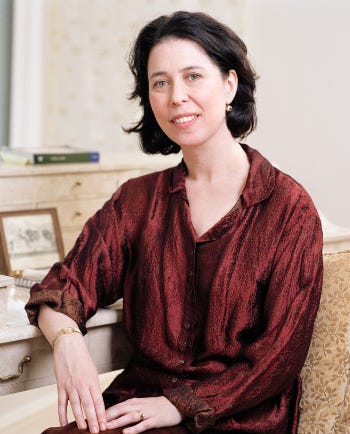
Speaking of Isola
Q: Your protagonist, Marguerite, will live forever in my heart. Was it challenging to craft such a nuanced character?
A: I knew that I wanted Marguerite to tell her own story and so crafting her character began with figuring out her voice. The first sentence of Isola is—I never knew my mother. She died the night that I was born, and so we passed each other in the dark.
I spent a long time thinking about those words, because I wanted to get Marguerite’s voice right. She tells her story and I was thinking about how she might sound as a noblewoman from long ago. I knew she could not sound like a 21st century woman. At the same time, I wanted her to speak clearly and accessibly. I did not want her to sound archaic. I settled on a voice for her that is just a touch more old fashioned than the way we speak now (in English). She does not use modern idioms, and the rhythm of her speech is ever so slightly old fashioned.
Q: Isola was the first book where I learned that instruments such as virginals and citherns existed. How much research went into creating a realistic historic setting?
A: While writing Isola I listened to lute music from the period, mostly because I wanted to understand what my characters might be playing or hearing. In the days before recordings, streaming, and smart phones, people with time played music when they got together and they practiced a lot too. When Reese’s Book Club chose my book for their followers, Reese’s social media team asked me for a playlist of music that inspired my book. I sent them my compilation of lute music and included videos of musicians playing period instruments. The team said that this was not what they had in mind! They asked for popular contemporary music that might have inspired my book. I thought a lot about what songs and artists might express what Marguerite goes through on her island. My best idea was the song Alaska by Maggie Rogers.
My research included reading as much as I could about Marguerite and her world. I studied fashion and jewelry of the period by looking at art, particularly paintings of young noblewomen. I learned about ships of the period and spent some time in London walking on a replica of The Golden Hind, a 16th century vessel. I also looked for women’s voices and found Anne of France’s Lessons for My Daughter which is a guide to being a good princess. I begin each section of my novel with a passage from that pious book and I decided early on that in each case, either by choice or by necessity, Marguerite would do the opposite of what Anne advises. I would advise writers to read as much as you can, to write about what interests and excites you, and to take the time to develop and revise your work. Don’t rush.
Q: Is there a piece of advice that you think every writer should take to heart?
A: I would advise writers to read as much as you can, to write about what interests and excites you, and to take the time to develop and revise your work. Don’t rush.
End.
Conclusion
Isola has earned a permanent place on my Favorites shelf. I know I will return to it before long, even if it breaks my heart again, because the stories that remain with us are often the ones that wound us a little.
A truly excellent novel reminds us how deeply we are still capable of feeling; in a world so determined to numb and distract, I find myself grateful for the ache that a powerful story can leave behind.
If you are curious about my review of Isola, you may follow the link below. Thank you again to Allegra Goodman for visiting the Tearoom. It was a delight to share tea and conversation with you, and I hope you will return again someday—whether to speak of Isola, or of another beautiful novel waiting quietly on the shelf.
To learn more about Allegra and her other novels, visit her author website here.

how exciting that you had the chance to interview the author!! i have added this book to my TBR list!
I recently purchased Isola on sale for Kindle, and I am now eager to read it!