


Over the course of this year, I have been reading voraciously. The term used these days is analog—an active choice to do things offline whenever possible.
I was already doing this before it became a trend. I was already keeping handwritten journals, filling book margins with notes, and seeking stories of people and subjects that inspire me. These books have become a reflection of what I have been building at The Tearoom—a place devoted to curiosity, beauty, and lives that history sometimes overlooks.
According to my Library log, I am nearing sixty books for the year. Several have been biographies of remarkable women—all of whom are admirable, but their tales are quite different. Some names have been taught in schools and lore: Marie Curie, the discoverer of radium, or Marilyn Monroe, the Hollywood icon. Others are lesser-known figures whose lives survived only in fragments, letters, paintings, and scattered records. I think of Anne Bradstreet, America’s first published female poet, or Lisa Gherardini, believed to be the woman who sat for Leonardo da Vinci’s Mona Lisa.
A few of these women have already found their way into the pages of The Tearoom as reviews. Not all of them, though, so today I decided to gather my favorites into one place.
These are books about women who shaped art, literature, science, exploration, and culture in ways both large and small. Some changed the course of history. Others quietly preserved it. All left behind a story worth remembering.
No. 035 — Camera Girl by Carl Sferrazza Anthony
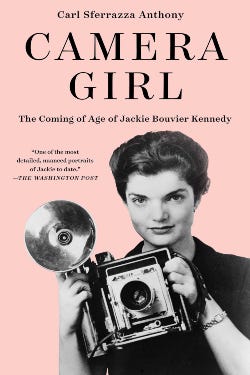
Jackie Bouvier was never exactly ‘in the margins.’ Still, Carl Sferrazza Anthony’s biography, Camera Girl, illuminates a lesser-known chapter of her story: the years before she became Jacqueline Kennedy.
Long before the White House, she was a young journalist navigating Washington with ambition, curiosity, and an expensive camera slung over her shoulder.

Bouvier’s first notable career was as the “Inquiring Camera Girl” for the Washington Times-Herald. She wandered the city asking ordinary people unexpected questions, then published their answers alongside her photographs.
It was an apprenticeship in observation—one that sharpened the wit, confidence, and social intelligence that would later define her public life.
No. 049 — Marilyn and Her Books by Gail Crowther
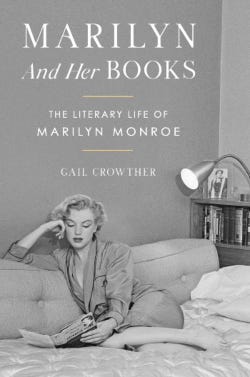
Few public figures have been so thoroughly mythologized—and so persistently misunderstood—as Marilyn Monroe. Reduced to an image, a voice, or a tragedy, she is often remembered for how she appeared rather than how she thought.

Marilyn and Her Books by Gail Crowther offers a different portrait. Through the volumes Monroe collected, annotated, and carried with her throughout her life, Crowther reveals a woman of intellectual curiosity and serious literary ambition. The result is not merely a study of a personal library, but a reminder that reading leaves traces behind.
In the margins of Monroe’s books, another Marilyn emerges: thoughtful, searching, and determined to be known as more than a symbol.
No. 006 — Book of Ages: The Life and Opinions of Jane Franklin by Jill Lepore
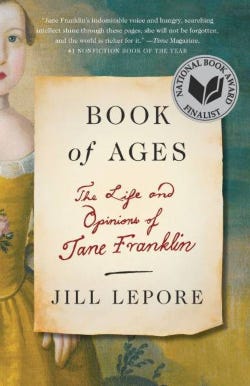
History remembers Benjamin Franklin. It remembers his inventions, his diplomacy, his wit, and the many stories that gathered around his name. His younger sister Jane Franklin, meanwhile, was left largely in the margins.
In Book of Ages, Jill Lepore reconstructs Jane’s life from the fragments she left behind: letters, records, and scattered traces that survived the centuries. Though she received little formal education and spent much of her life constrained by the expectations placed upon women of her era, Jane possessed a sharp mind and an enduring curiosity about the world around her.
What emerges is not simply the story of Benjamin Franklin’s sister, but the portrait of a woman whose life was every bit as complex, intelligent, and human as those typically granted a place in history books. Book of Ages is a reminder that some of the most compelling stories are hidden not at the center of the historical record, but along its edges.
No. 010 — Dickens’ Artistic Daughter Katey by Lucinda Hawksley
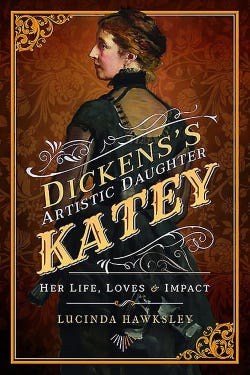
For much of her life, Katey Dickens appeared in history as a supporting character: the daughter of Charles Dickens, the sister of a famous family, a figure standing just beyond the spotlight. Yet Dickens’ Artistic Daughter Katey reveals a woman whose life was far more interesting than the footnotes allotted to her.
An accomplished artist in her own right, Katey moved through the cultural circles of Victorian England with intelligence, wit, and a keen eye for the people around her. She witnessed both the brilliance and the contradictions of her celebrated father, preserving insights that would later prove invaluable to biographers and historians.

What makes this biography so compelling is its refusal to treat Katey merely as an extension of the Dickens legacy. Lucinda Hawksley restores her as a creative woman navigating the opportunities and limitations of her era, determined to make a life beyond the shadow of a famous name.
Like many of the women gathered in this list, Katey begins as someone history remembers in relation to another person. By the final page, she stands firmly in her own frame.
No. 041 — Abundant Beauty by Marianne North
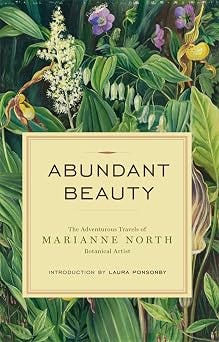
Marianne North is often remembered as an exception: a Victorian woman who traveled alone, painted what she saw, and refused to confine her work to the expectations of her time. Her autobiography Abundant Beauty resists the idea of exceptionality as novelty. North presents her own life as something deliberate, sustained, and deeply disciplined.
North’s botanical paintings are not simply studies of plants, but records of place—tropical forests, unfamiliar coastlines, and gardens she encountered across continents. She painted without formal artistic training, relying instead on observation and an unwavering commitment to documenting the living world in all its density and excess.

What emerges from her work is not a restrained or curated nature, but something closer to abundance itself: tangled, luminous, and insistently alive. In this sense, North does not stand at the edge of Victorian art history as a curiosity. She expands it.
No. 045 — Elements of Marie Curie by Dava Sobel
Some women on this list are remembered only by devoted readers and historians. Others achieved a level of fame that few people ever attain. Yet even the most celebrated women can become simplified by history’s retellings.
Marie Curie is one of those rare figures whose name is widely known, yet whose story is often reduced to a handful of accomplishments. Sobel restores the woman behind the legend: a young Polish student who crossed borders in pursuit of an education, a scientist whose relentless curiosity led to discoveries that transformed modern medicine and physics, and a widow who continued her work despite immense personal loss.
What stayed with me most was not simply Curie’s brilliance, but her steadfast dedication to knowledge itself. She belonged to a generation of women who had to fight for entry into rooms where they were not expected to belong, and then proceeded to change the world from within them.
Reading her life felt like encountering another woman who had quietly stepped out of the footnotes and claimed her rightful place in history.
No. 056 — Mona Lisa: A Life Discovered by Dianne Hales
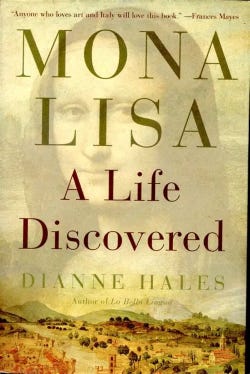
For centuries, Lisa Gherardini has been one of the most recognized faces in the world and one of its least-known women. Millions have stood before her portrait, yet few have paused to wonder about the life behind the smile.
In Mona Lisa: A Life Discovered, Dianne Hales follows the surviving traces of Lisa’s world—Florence during the Renaissance, the family she belonged to, the marriage she entered, and the society that shaped her daily life. Drawing from historical records and recent scholarship, Hales reconstructs a woman who has long been overshadowed by the painting that made her famous.

What makes the book so compelling is its insistence that Lisa was more than a muse. She was a daughter, wife, mother, and participant in one of history’s most remarkable cultural moments. The portrait remains extraordinary, but Hales gently shifts our attention from the masterpiece itself to the human being who sat before it.
Like many of the women gathered in this list, Lisa begins as a familiar image and ends as a person—her story restored to the frame from which it had nearly disappeared.
Bonus Recommendation — Mistress Bradstreet: The Untold Life of America’s First Poet by Charlotte Gordon
Anne Bradstreet occupies a curious place in American history. She is often remembered as a literary first—the first published poet in colonial America—yet the complexity of her life is frequently reduced to that distinction alone.

In Mistress Bradstreet, Charlotte Gordon reconstructs the world behind the poems. Bradstreet emerges not merely as a historical milestone, but as a woman balancing intellectual ambition with the demands of family, faith, and life in an uncertain colony. Through letters, journals, and surviving verse, Gordon reveals a writer who questioned, observed, and wrestled with the contradictions of her age.
What makes Bradstreet so compelling is how modern she often feels. Her poems move between domestic life and larger questions of mortality, love, loss, and belief. Long before American literature possessed an established tradition, she was creating one. Reading her today feels less like encountering a distant historical figure than discovering a voice that has been waiting patiently across the centuries.
Conclusion
These books do not belong to a single category so much as they share a common act of attention: the willingness to look again.
Each one begins with a familiar outline—a famous name, a historical figure, a woman already half-formed in public memory—and then slowly restores the depth that was never lost, only overlooked. A journalist before a First Lady. A myth before a reader. A sister, a daughter, a wife, a painter, a collector of books and images and questions.
Taken together, they suggest that the footnote is not a lesser place, but a misread one. It is often where the most fully human parts of a life have been quietly waiting.
And so this list is less about women who stepped out of the footnotes than it is about the act of noticing that they were never only footnotes at all—and that attention, given long enough, can change the shape of what history appears to be.
This is a wonderful list - thank you for introducing me to these books ☺️