


Though I wrote this post weeks ago, I’ve been hesitant to publish it. The same Writer’s Block that I wrote about in this post kept telling me there was no point. I’m not sure how to explain this reluctance. I’ve already written about several U.S. Presidents and their wives this year, and was able to do it cheerfully.
I’ve only read one book about President James Monroe. Because of this, I’m not sure I’ll feel that I ‘know’ him until I read a different one for cross-referencing. I do have a second book about him on my Kindle, and I’ll tackle that next year (I’ve already begun reading about John Quincy Adams, and I’m not sure I’ll finish that book in 2025. We never know!)
I leave this explanation, not hoping for praise, but in order to explain why I’ve waited so long to post another nonfiction article. I’m working on getting into full swing again. I’m already quite looking forward to writing about John Quincy Adams; perhaps you’ll get a post about him much sooner!
I hope December is treating you kindly, and if you find something in this post that I’ve gotten wrong, feel free to offer critique! I’m still here to learn, and I want to know this story well. Now, I will publish this before I lose my nerve! Thanks for reading!
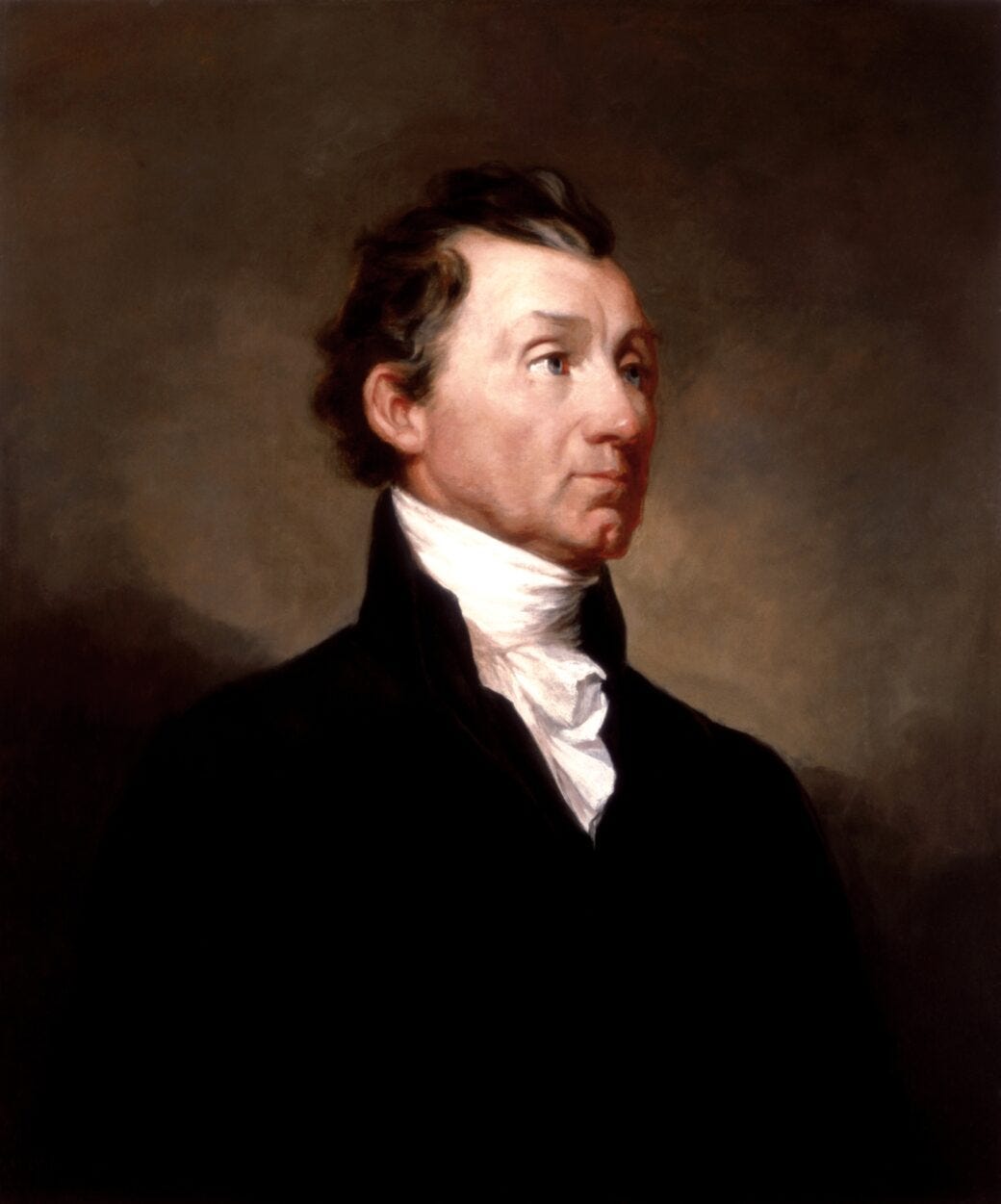
When our nation was still young, there came to be a so-called ‘Virginia Dynasty.’ This refers to four out of five Founding Fathers who were elected as president. These men were born in the state of Virginia. That is where they made their lives, built their houses, and set their roots. The men in question were George Washington, Thomas Jefferson, James Madison, and James Monroe.
Over the course of 2025, I’ve explored the lives of these Virginia-born presidents. I pored over books about them and their wives. I was delighted to find that our early history, when seen from all of their viewpoints, is fascinating.
James Monroe, our fifth president, was the member of that Dynasty I knew least about. I’ve now finished a book about his life. The picture of our early history is growing in my mind, and these lesser-known figures come into focus.
Before I read this, Monroe seemed invisible, in comparison to some of his peers. His story is still impressive. I’m glad to share a bit about him now, and plan to write a follow-up post about his married life. His wife, Elizabeth, also had the courage necessary to live in that time.
I was surprised by the similarities these earlier leaders shared. I was also pleased to learn about the ways in which they differed. Though they shared a love for the new country, their personal beliefs clashed. Their personalities could be different as night is from day. All the same, they usually found ways to work together.
James Monroe, was born on April 28, 1758, in Monroe Hall, Virginia. His parents were Andrew Spence Monroe and Elizabeth Jones. He had four siblings: a sister, Elizabeth, and three younger brothers, Spence, Andrew, and Joseph Jones. Unlike some of the Founders, Monroe grew up on a farm.
According to Harlow Giles Unger in his book James Monroe: The Last Founding Father—
James Monroe’s boyhood home was typical of second-tier Virginia farms—a one-story wooden structure topped by a half-story dormered attic, whose “rafters and beams showed plainly the unskilled ... craftsmanship of the period.” Front and rear doors opened on opposite sides of the house to let breezes flow through the wide central hall and rid the house of Virginia’s oppressive summer heat.
The hall was the center of family life, serving at once as living room, dining room, and kitchen. A slow wood fire in a deep “old-time fireplace” kept meats crackling on the spit, while “an array of pots and pans hanging on cranes” bubbled with stews.”
James Monroe’s father, Andrew, taught his son the value of hard work. As the oldest child, it was expected that James would one day inherit much of the workload.
When he turned eleven, Andrew enrolled him at a small school with other farm boys. Most of the pupils were busy with farm work, so they only attended about twelve weeks a year. Like many other Founders, James learned his most valuable lessons through books. His father and mother taught him to read and write; they used Scripture, of course, as well as the essays of popular authors of the time such as Alexander Pope.
In 1772, James’s mother, Elizabeth, died. Her absence would force fourteen-year-old James to take responsibility over his siblings, some of whom would be thorns in his side during his public life. Not long after this loss, Andrew Monroe also died, leaving his eldest son in charge. James was forced to quit school and devote himself to farm work. With help from a maternal uncle, James learned to manage the family farm.
All the while, James Monroe dreamed of being something different, and he pursued that goal. When he was older, he attended the College of William and Mary. It was known as the educational and political training ground for Virginia’s establishment. At college, he learned about government and politics, and they sparked a passion in him. It wasn’t long before he decided he wished to have a career in such matters.
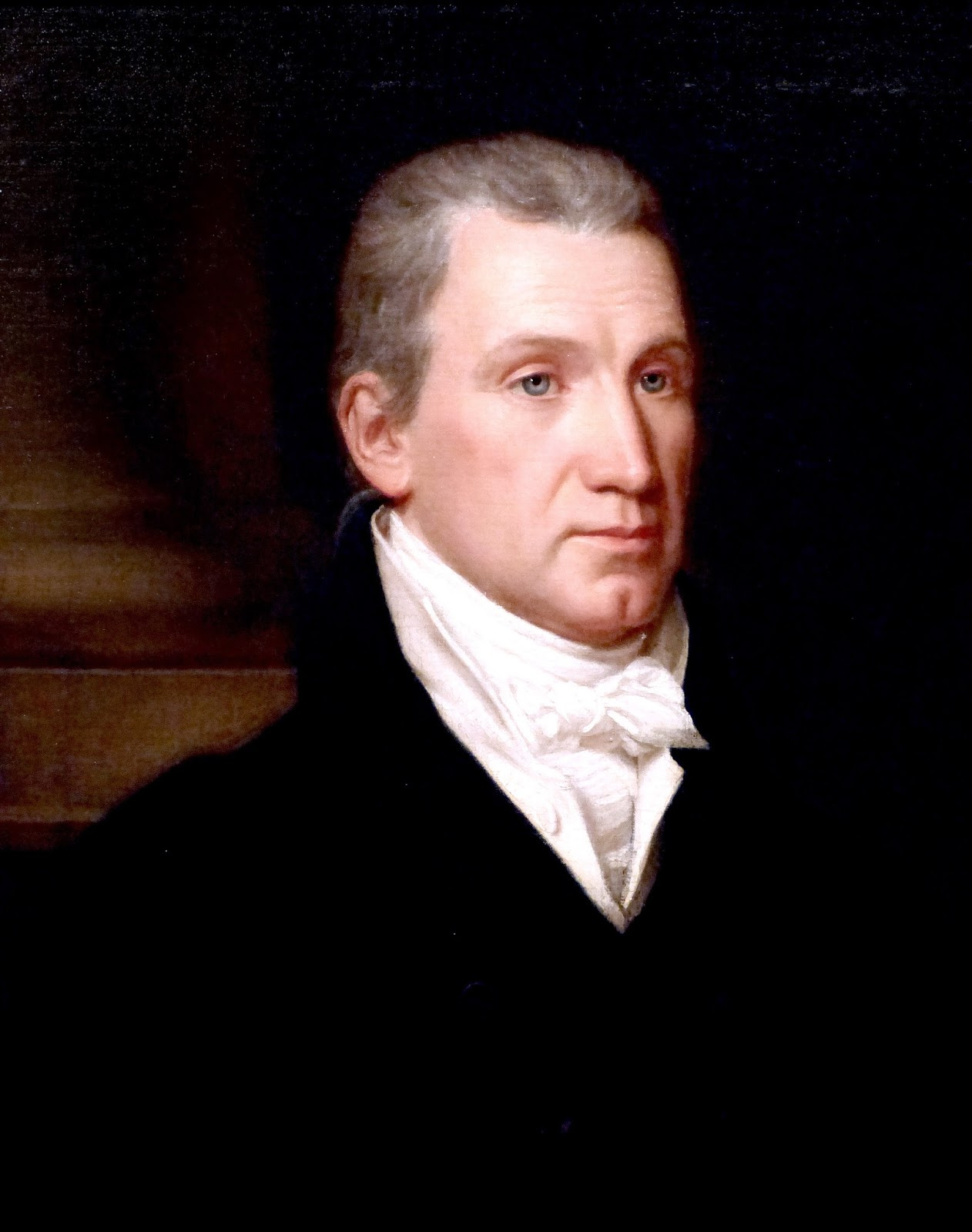
Little could he suspect the grand role that he would play in the politics of Virginia. The events of the Revolution would take place shortly after he entered college. In the midst of such chaos, Monroe would make some great friends to aid in his political success.
James Monroe, like many of his peers, participated in the Revolutionary War. Those battles paved the way for him to shine during the War of 1812. After the Revolutionary War began, pupils of the College of William and Mary began participating in drills. They were bracing themselves for the moment when they might be needed in battle.
Monroe sought a chance to participate. He interrupted his studies by enlisting in the Virginia Infantry. The Infantry was in need of literate men to serve as officers, and he fit the bill. Soon, eighteen-year-old Monroe was appointed a lieutenant. For two months, he trained with other young men on the William and Mary green.
His first chance to fight arrived when, on August 10, the British landed more than 30,000 men on Staten Island in New York Bay. Once it became clear that more men were needed, Washington called for aid. Among those who responded were ten Virginia Infantry companies, including the young men from William and Mary.
When they reached Washington’s headquarters on Harlem Heights, they were too late. Twenty thousand British and Hessian troops had overpowered Washington’s army, killing 1,500 and capturing their food supplies. This was not their only opportunity: Monroe was also present during the battle at Kips Bay in Connecticut on September 15, when five British ships in the East River unleashed a furious attack of cannon fire. Gripped by fear, 6,000 of the 8,000 Connecticut troops fled. (“Good God,” Washington cried— “are these the men with which I am to defend America?”)

The departure of Connecticut troops gave Virginians an opportunity to show their own devotion to their country. Two days after Kips Bay, 1,500 English troops began an advance across a meadow. To stall their arrival, the Virginians opened fire. Their relentless attack quickly caused the British to turn and retreat.
Monroe was present, and—as Harlow Giles Unger put it—“The quiet boy from Monroe Creek had found his voice,” as he cheered with his fellow soldiers after this victory.
During the Revolutionary War, James Monroe made allies who were vital in his political future. These included the Marquis de Lafayette, whose friendship would endure into their old age. Monroe also became close with Alexander Hamilton and George Washington.
Monroe had earned himself a place of high esteem among these men of great rank. They wrote letters of recommendation to help then-Lieutenant Monroe find opportunity in higher places. An example is this attempt by Washington to secure him work as a battlefield commander, in December of 1778:
“I very sincerely lament that the situation of our service will not permit us to do justice to the merits of Major Monroe, who will deliver you this....
But ... it is with pleasure I take occasion to express to you the high opinion I have of his worth. The zeal he discovered by entering the service at an early period, the character he supported in his regiment, and the manner in which he distinguished himself at Trenton, where he received a wound, induced me to appoint him to a captaincy in one of the additional regiments... He has in every instance maintained the reputation of a brave active and sensible officer.”
After finishing Unger’s book about James Monroe, I felt that his life and contributions to history have been underrated. Monroe’s participation in the Revolutionary War was important, but it would not be until later that he had an opportunity to make something great of his name.
I daresay he had courage to match that of his fellow Virginian, George Washington; he put it away until that time later on when the nation most needed him. By the end of his life, he would have married a brave woman, gone to France to serve as minister, led to a victory during the War of 1812, and created a law that we still speak of to this day.
In my next post, I will introduce you to James Monroe’s wife, Elizabeth Monroe. I always wondered why she was not mentioned much. What I learned about her story, and the mark that she made on our history, was just as enthralling as her husband’s life. Our early history is filled with brave women as well as men; we need only look a little harder to find them.

Well done! Clearly, those around him must have thought much of him— as an orphan, he would have needed someone of great reputation, possibly even more than one, to sponsor him, basically vouch for his character and such, to get into school, especially with his meager formal training. Most colleges required you to know a bit of Latin and Greek just to start— I wonder what he studied on his own.
I definitely need to read more about him, he does tend to get forgotten about next to the other Founders. My favorite story about him so far comes from the War of 1812. While serving as Madison's Secretary of State, he mounted his horse and scouted out the invading British Army.