


It was summer in the year 1784. Thomas Jefferson, who would one day be the third President of the United States, was a minister sent to France as a representative of that young nation. Having emerged from a bloody revolution, they were struggling to find representation in the wider world; they also sought trade and protection from a European country.
Those first years were tumultuous; America’s best were sent off as ministers. Jefferson had been preceded in Paris by John Adams and Benjamin Franklin. Franklin, in particular, left a favorable impression on the Parisians with his aloofness, as well as his sharp, inventor’s mind.
Jefferson would struggle a bit more to find his place in such a different world. First things first, however; he was determined to win respect for his eldest daughter, Martha. At the time, he had three surviving daughters—Martha, Maria, and Lucy. Later, there would be another daughter called Harriet, that he would have with one of his slaves, Sally Hemings. Their meetings would begin, at some point, in Paris; the details surrounding them remain elusive.
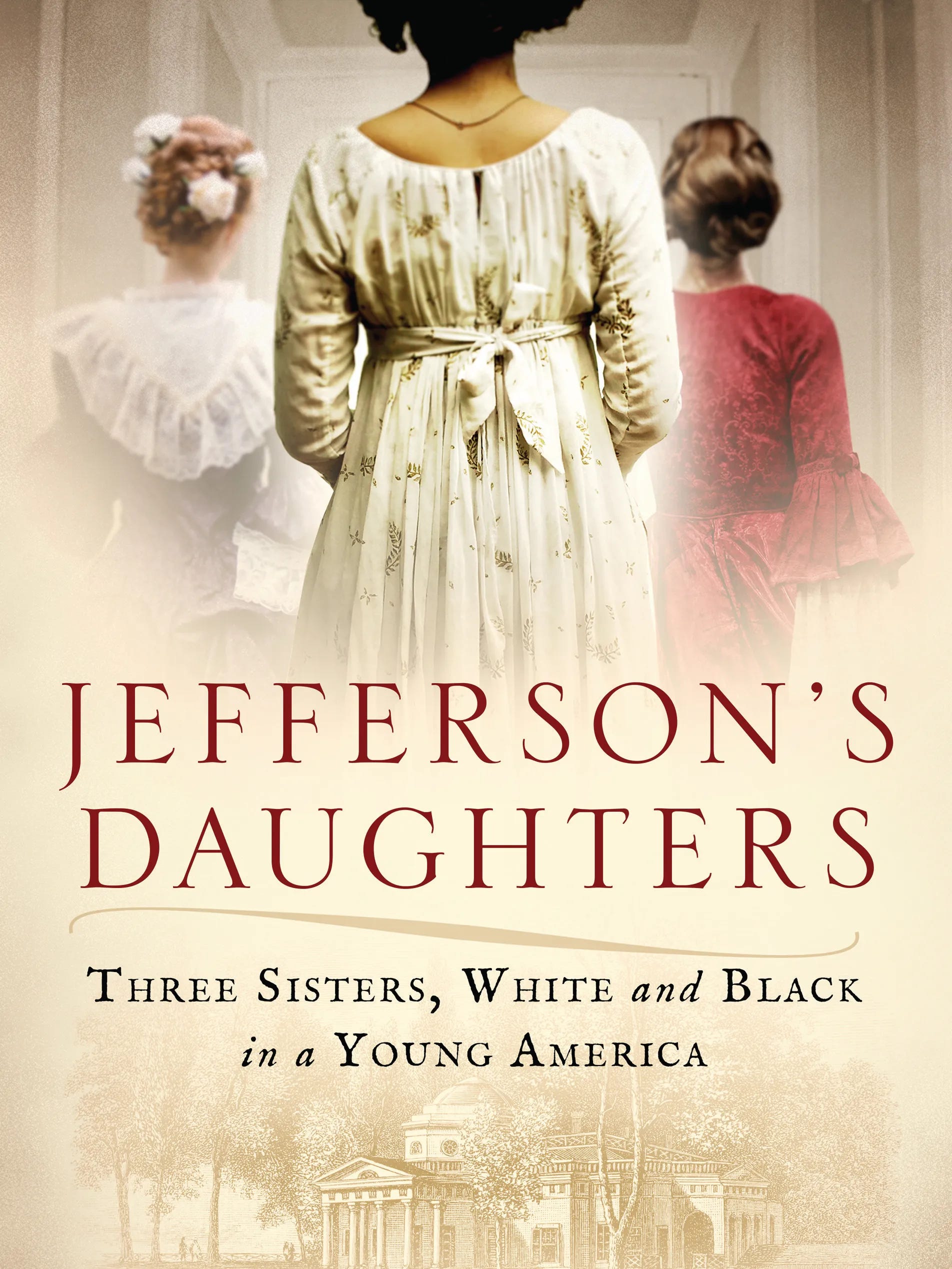
The book Jefferson’s Daughters by Catherine Kerrison does a wonderful job of seeking details. Kerrison uses genealogy, as well as interviews with Sally Hemings’ sons, to try and fill in the blanks. While she was not to have the same place of privilege as his older daughters, Harriet’s story—at least, what is known of it—is impressive, given the situation into which she was born. She would be set free on reaching adulthood, and would disappear to live her life as a white woman, though no one knows where she actually vanished.
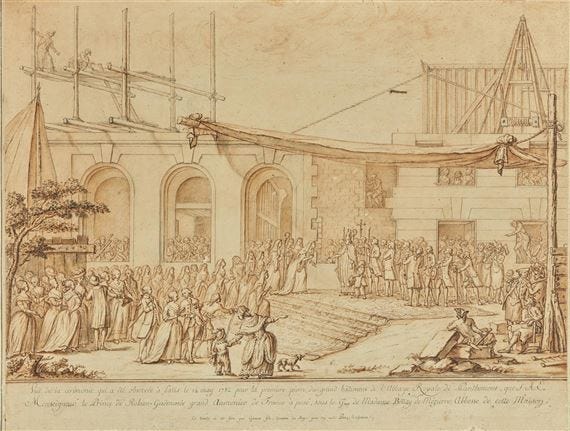
However, on June of 1784, Jefferson was accompanied by only Martha. He was determined that she would have an education to reflect her dignified status. For this purpose, Jefferson chose the Parisian boarding school called Panthemont, a Catholic nun school which also accommodated Protestants. It was an elite school, housing princesses and daughters of dignitaries.
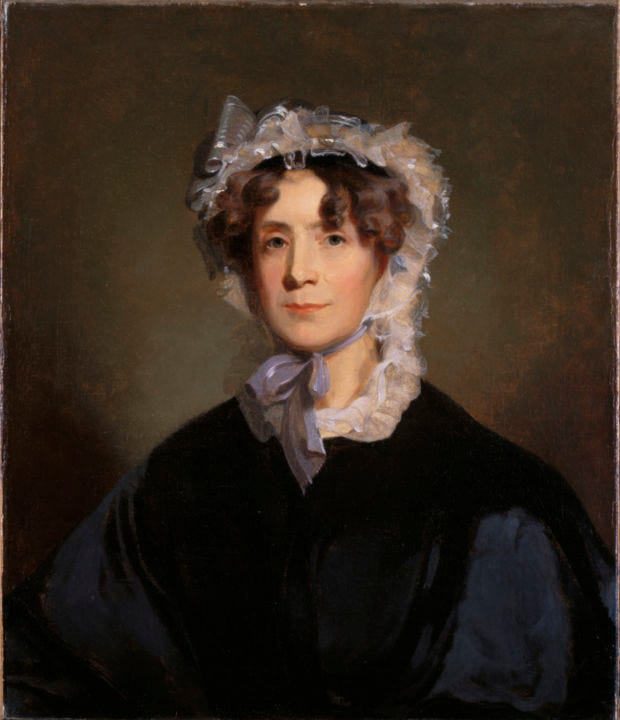
At Panthemont, Martha Jefferson would blossom into a madame who enjoyed the best of society. Her surviving letters, as well as those of her friends, tell the story of a young lady thriving in a foreign land. She would learn the acknowledged ‘feminine arts’ such as music, art, and literature; she would also learn subjects Jefferson did not think proper for ladies, such as astronomy. Panthemont would expose her to a world more complex than anything she had known in Virginia—and more lively than anything she would know since.
Kerrison offers a description of what the Jeffersons saw when they first arrived at Paris:
Paris was—even conservatively—at least a dozen times bigger than Philadelphia. Its maze of more than eight hundred streets defied the efforts of visitors, foreign and provincial alike, to find their way to the city center. Most streets were narrow and crowded, filled with stalls where Parisians hawked their wares or brought their work, their socializing, and their arguments. Hazards abounded: dangling shop signs, projecting additions to overcrowded homes, overhanging flower boxes.
A crowded city, Paris was not glamorous at every corner. The Jeffersons would have been greeted by the overpowering odor of the Seine River. In those days, that body of water was already polluted by sewage and other waste. To this day, the Seine remains one of the most unhygienic rivers. Though the odor has been (for the most part) controlled, it is still not recommended to swim in that water.
The people of Paris did not know what to make of the ambassador and his daughter. The Jeffersons struggled to adjust, and—lest he and Martha be written off as country bumpkins—Jefferson was soon spending money on new wardrobes for both of them.
He would later be remembered for his reckless spending habits; by the end of his life, he would be drowning in debt.
In Paris that summer, it was important that Martha fit in, so her father went shopping:
The very day they arrived, he spent 167 livres on clothes for Martha and 120 livres for a single pair of sleeve lace ruffles for himself-this in a society in which a female servant was doing well if she earned 12 livres a month. He also bought a couple of yards of cambric and lots of edging—perhaps to be made up for ruffles for Martha.
Martha would benefit greatly from her Panthemont education. It instilled in her an ambitious spirit. This spirit would prove helpful, given her father’s role in politics. She would go on to teach her daughters with a similar curriculum.
Once Martha returned to Virginia, she would never again leave the country. She would always hold herself with the air of a lady who reached womanhood in a place of high status. So great was the ambitious spirit instilled in her, that she would never feel at home in Virginia, where she would have few opportunities to use that knowledge.
Martha Jefferson married her third cousin, Thomas Mann Randolph, on February 23, 1790. She and her cousin both knew travelers’ restlessness. He had studied in Scotland, nearly at the same time that Martha lived at Panthemont. They must have shared memories of life abroad, as well as frustrations about life at home, a world which—though new—was incredibly small in comparison.
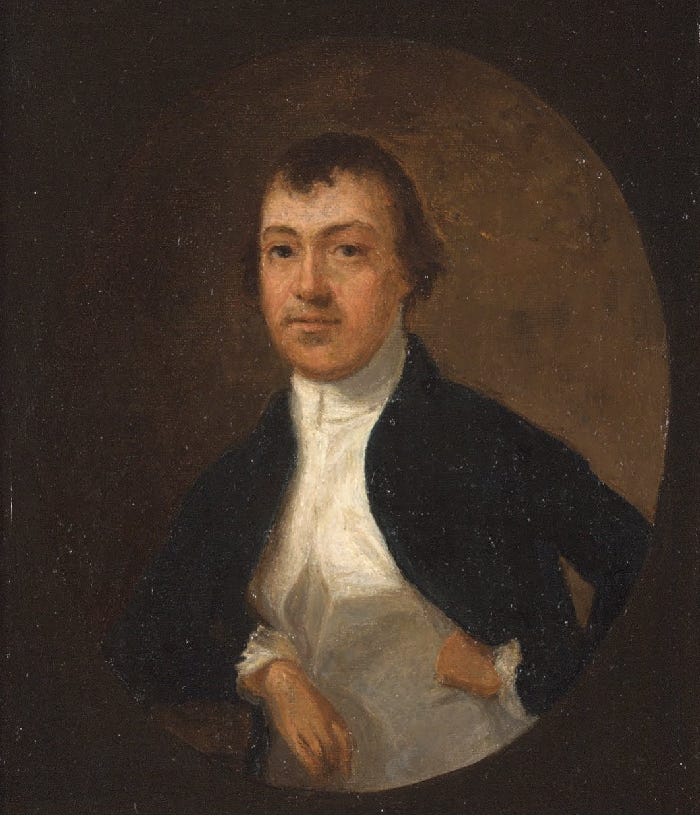
Thomas Randolph proved to be a hard worker. He had been a secretary for Martha’s father and would seldom make a decision without consulting his father-in-law. He would also prove to have a mercurial temper; in the final years of their marriage, he and Martha would spend most of their time in separate homes.
They had eleven surviving children. Martha would find purpose in educating the brood. In her father’s house, Monticello, Martha would have a parlor all to herself; there, on a bookshelf, stood some of the books that she would use. Those books are still there, today.
So efficient was her method of teaching the Randolph children, that her father would recommend her advice to a Virginia friend who sought advice for female education:
The catalogue [Jefferson] appended to his letter, however, was compiled by Martha and one of her daughters (probably Ellen), not by him, and it shows a very different approach. Martha’s own education and formation at Panthemont are reflected in this more substantial program for female scholars, even for those of humbler rank than her children: French literature (to be read in French), all the luminaries of English literature, ancient history, modern histories of Europe, America, and Virginia, mathematics, geography, natural history, and science. Perhaps no works on the list prove the continuing influence of her French education more than the writings of Madame de Genlis; she recommended no fewer than four of her books!
Ellen was Martha’s daughter, Eleanor Wayles Randolph. She, also, would be known for a clever, capable mind; of the whole Randolph brood, she would prove to be one of the quickest to learn. She would frequently correspond with her grandfather about the books she was reading.
The third President would delight in his granddaughters’ studies, even if he did not believe women should receive educations like their brothers. He would consider his daughters’ education as only “occasionally requiring” his attention, as opposed to the curriculum he would recommend for boys:
Jefferson then sketched out in broad strokes his recommendations [to educate girls]: carefully selected novels only (since most, he thought, were inclined to result in “a bloated imagination and sickly judgment”); for the same reason, only select poetry to promote “style and taste”; and French, dancing, drawing, and music. It was an utterly conventional program of study, essentially unchanged in thirty years. Of lessons in household budgeting, Jefferson knew “I need say nothing,” since running a household was a given for American mothers.
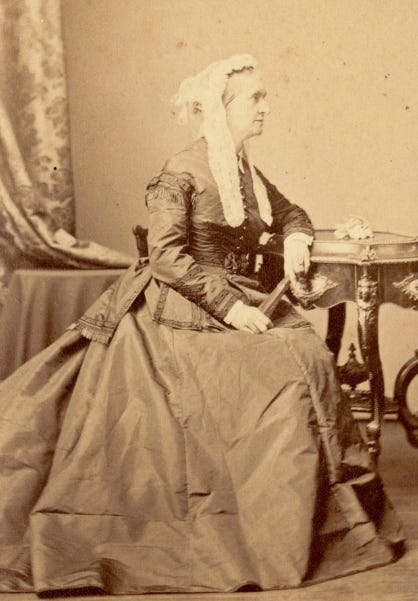
In the end, Martha would not much differ from him. While she did offer her daughters more thorough lessons, they were not taught these things with the purpose of becoming independent. She taught her daughters that they could enjoy ‘the life of the mind’ and encouraged them to break free of the chains of gender conventions. It was not the same thing as independence, not full equality. They could enjoy weightier subjects, in private, ever aware of what paths were closed to them.
Martha Randolph’s daughters were given sharp minds. They would ever struggle with expectations that had been instilled in them. Though they wore the important name of Jefferson, they were still women. It was painful for them to settle after studies were finished—painful, because their mother had given them expectations much higher than what was available to them.
Panthemont had been a school for princesses, situated in the heart of Europe, punctuated by the politics of the region and the wealth of its attendants. Martha had found herself disappointed when she returned with her father to Virginia, where women had little to do with such extensive learning. She might not have realized it, but her daughters also would suffer with the same shock, only in a different form. Their hearts, too, craved greatness.
However, we must not forget: they could boast of having received an education superior to those of their peers. They were given ideas more suited to a future era.
The Randolph children would carry with them memories of Monticello, long after their grandfather died in debt, forcing them to sell the house. Perhaps, they were not so deprived after all.
It is good, I think, to have expectations—far better than to expect nothing from life.
One historian has described the ideal woman of the early republic. They were expected to be “astute enough to be politically null”—paying attention to politics, not participating. They were expected to attend events, where they would be seen, not heard.
President Jefferson expressed regret that Martha had received an elaborate education in Paris. He was aware of the expectations it had given her. He would ensure that his younger daughter, Maria, did not find the same opportunity. Maria would be offered ‘proper’ lessons at a Pennsylvania boarding school—music, art, dancing.
Maria would die at a young age after giving birth to a son. There are few surviving letters from her; she struggled with sitting and putting her thoughts to a page. One could say she had the proper mindset for a woman of her time. Unlike Martha, she did not have as many memories from a different continent; she was only in Paris for a short time.
Martha and Maria were two different ladies, alive at a time of great change worldwide. I believe that, even if they could only go so far, their memories are good for ladies of our time. Women of the Revolution had many battles of their own to fight before they could enjoy the same opportunities as their brothers.
The existence of women like Martha Jefferson Randolph and her daughters, would encourage future generations to reach for the books. Even if it seemed like all they could do at the time was read, I believe that they were wonderful examples to us. When we don’t see opportunities, we make them. It is always worth the effort to learn. Let us never be afraid to aspire high; if no one ever did so, where would we be now?
Jefferson’s Daughters is a wonderful read that swallowed me up for over a week. I recommend it to anyone who loves history, American history, women’s history. I’m sure I will write about it again, and often.
What are you reading now? How did April find you? I would love to have a chat—leave your comment!
The Building of the U.S. Capital

My regular readers know I have begun a quest to learn about our nation’s early history.
Ugh, proper is such a finicky word, so often used to hold people back!
Terrific post. I'm such a fan of Thomas Jefferson, but I am always disappointed when reminded of his views about girls' and women's education. He was shortsighted in this regard, and his daughters suffered for it.