


The Itch to Write
The practice of keeping a diary—of committing to paper one’s personal thoughts and fears—is not new.
Diaries have been kept for many reasons, and have taken many forms, for centuries. Much of what we know about history comes from mundane words written by ordinary people. These people did not believe anyone would benefit from those entries. They wrote for amusement, to practice their penmanship, or for school.
Diaries in their purest sense were different from the blogs we share today. They were seldom written with an audience in mind. Eighteenth-century diaries, in particular, were inner sanctums—private spaces for thoughts both personal and religious. They held secrets, confessions, prayers, and memories. They preserved precious moments, recalled talks with deceased relatives, recorded sermons that they enjoyed on Sundays—all without expectation of recognition.
Over time, diary-keeping became a primarily feminine practice. Women have always had much to say, even if they weren’t free to speak out loud. They filled pages with contemplations, hopes for the future, and milestones in the lives of their children. During years when women had limited opportunities for intellectual expression, a diary became a sacred receptacle for the life of the mind.

Women who dared not publicly speak opinions committed them, instead, to paper. Their words—wise, sharp, and human—were sometimes discovered centuries later. Today, many of these diaries are considered national or historical treasures. What these women might have considered mere trifles, often shed invaluable light on the world in which they lived.
One can only imagine how these writers might feel, knowing what their words contributed. Some would be pleased that their private thoughts mattered; others might be scandalized by the idea. Even now, a diary is intensely personal.
We don’t want others rummaging through our inner lives—not even after death.
Some Girls Write Secrets in Cipher
Beatrix Potter, known for her beloved book The Tale of Peter Rabbit, began keeping a diary as a teenager. It was a common practice for young girls in need of spaces to vent. After all, they were maturing out of childhood; they needed private spaces to confide their thoughts as they learned to navigate the world.
Potter’s diary, however, was unusual.
According to Linda Lear in Beatrix Potter: A Life in Nature:
Unlike most young women who have kept diaries, however, Beatrix Potter wrote hers in a cipher of her own devising: one that consisted pretty much of a letter-for-letter substitution, written in an ever smaller and smaller hand, sometimes in ruled exercise books, but just as often on any scrap of paper conveniently to hand.’
This crafty bid for privacy was so successful that, later in life, Beatrix could not uncover her own girlhood secrets:
Beatrix seems not to have spoken of her journal in later life, and only one extant letter written five weeks before her death refers to its existence. In it she explains … ‘When I was young I had already the itch to write (emphasis mine), without having any material to write about ... I used to write long winded descriptions, hymns(!) and records of conversations in a kind of cipher shorthand, which I am now unable to read even with a magnifying glass.
Her words are striking because she named something so many writers recognize: the itch.
Symptoms of the Storytelling Itch
The itch to write is a pleasant discomfort. Anyone who loves writing knows it—the compulsion to buy notebooks, the thrill of a blank page, the urge to capture something before it slips away.
But Beatrix Potter spoke of something more specific: an itch to write without knowing what to write about.
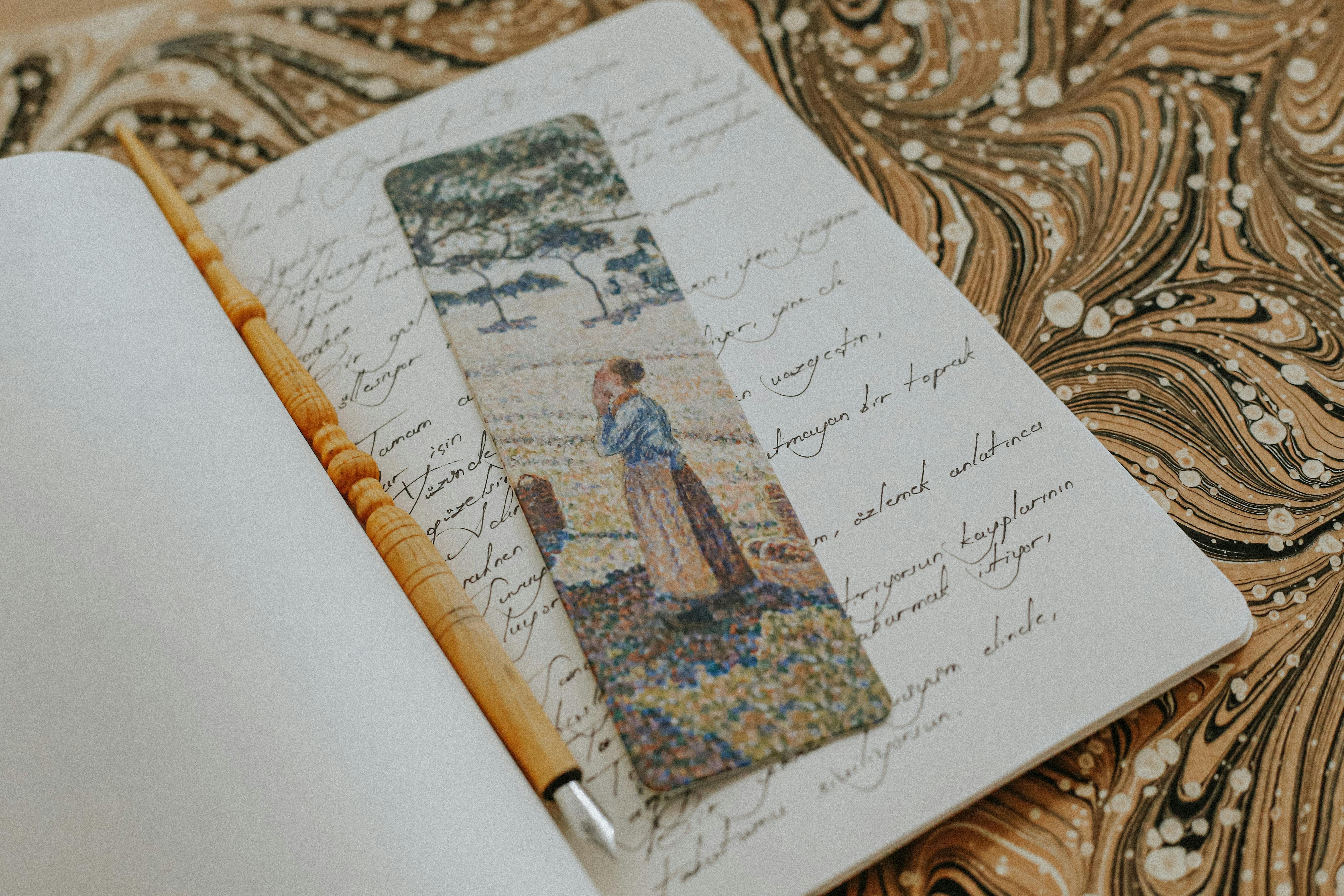
This is common among writers of all ages: a sense of calling without confidence. A desire to speak, paired with the fear that one has nothing worth saying. Sometimes insecurity becomes paralyzing. It can keep a person from ever starting their project.
The itch can feel frightening when we allow it to mingle for too long with apprehension. It can make us believe we’re talentless or insignificant. The itch is often so uncomfortable that it’s easier to ignore.
Like those ladies with their diaries centuries ago, we might not believe that our work might one day matter to others. Anne Frank’s diary offers a powerful example of how small thoughts can matter.
While Anne lived through unimaginable horrors, she did not only document those. She wrote about crushes, her family, and dreams for the future. These details make her words enduring: They allow us to recognize ourselves in her.
Someone, someday, may read the things we wrote as teenagers—or during seasons of quiet uncertainty—and find value in them that we never imagined.
Beatrix Potter didn’t ignore the itch. She felt it, doubted, and still wrote. Even if, as an adult, she couldn’t read those pages, the act of writing mattered. If writing is our calling, clarity often comes after we begin—not before.
Feeding the Itch
Itches are uncomfortable by nature. But for a writer, ignoring this itch leads to a sickness far worse. When writing becomes our art, therapy, and vocation, we can’t afford to eliminate the discomfort.
Writing schedules look different for everyone. Some people write a few sentences while sipping morning coffee. Others disappear into their manuscripts over weekends. Some add a paragraph a day; others write sporadically. All of it counts.
The only timeline that should concern a writer is not writing at all.
Sometimes the itch fades because of depression or exhaustion. During long periods of melancholy, opening a blank document can feel impossible. Other times, we avoid writing because we’re distracted, overwhelmed, or feel that our work must be perfect before it can exist.
Ignore the voices telling you this. The itch must be fed.
Read widely. Notice what moves you. Take walks and describe what you see. Get enough sleep when you can. Experiment with genres. Let curiosity lead instead of expectation.
Beatrix Potter named it perfectly: the itch to write. It’s a restlessness of both body and mind. It’s agony and ecstasy—the agony of wanting the words out, and the ecstasy of knowing they will come if we sit down and begin.
Don’t ignore the itch or the story that has been given to you. Feed it. Lean into it. Give yourself time to listen. Let your fingers move across the page or keyboard until the restlessness eases.
Inspiration doesn’t come easily to everyone. But if it has come to you—even faintly—pay attention. See where it wants to take you.
Recommended Reading
I could not write a post about diaries without sharing this article by my friend Wendi Nunnery. She tells a moving story about a trip she made to Amsterdam, during which she visited the annex where Anne Frank lived during the final years of her life.
Like those female diarists in history, Anne might’ve thought her diary insignificant—meant for her eyes only. Wendi’s words towards the end of this article prove otherwise, showing how it’s impacted millions of people since its publication in 1947:
I entered Anne’s orbit. I stood where she stood. I heard what she heard. The tears I’d been silently holding at bay finally fell.
Read Wendi’s article, and if you haven’t yet, please read a copy of The Diary of Anne Frank. I plan to find my copy again this year, too.

This is such a great piece, Mariella. Thank you for your kind words!
Mmm, yes, this is lovely.