


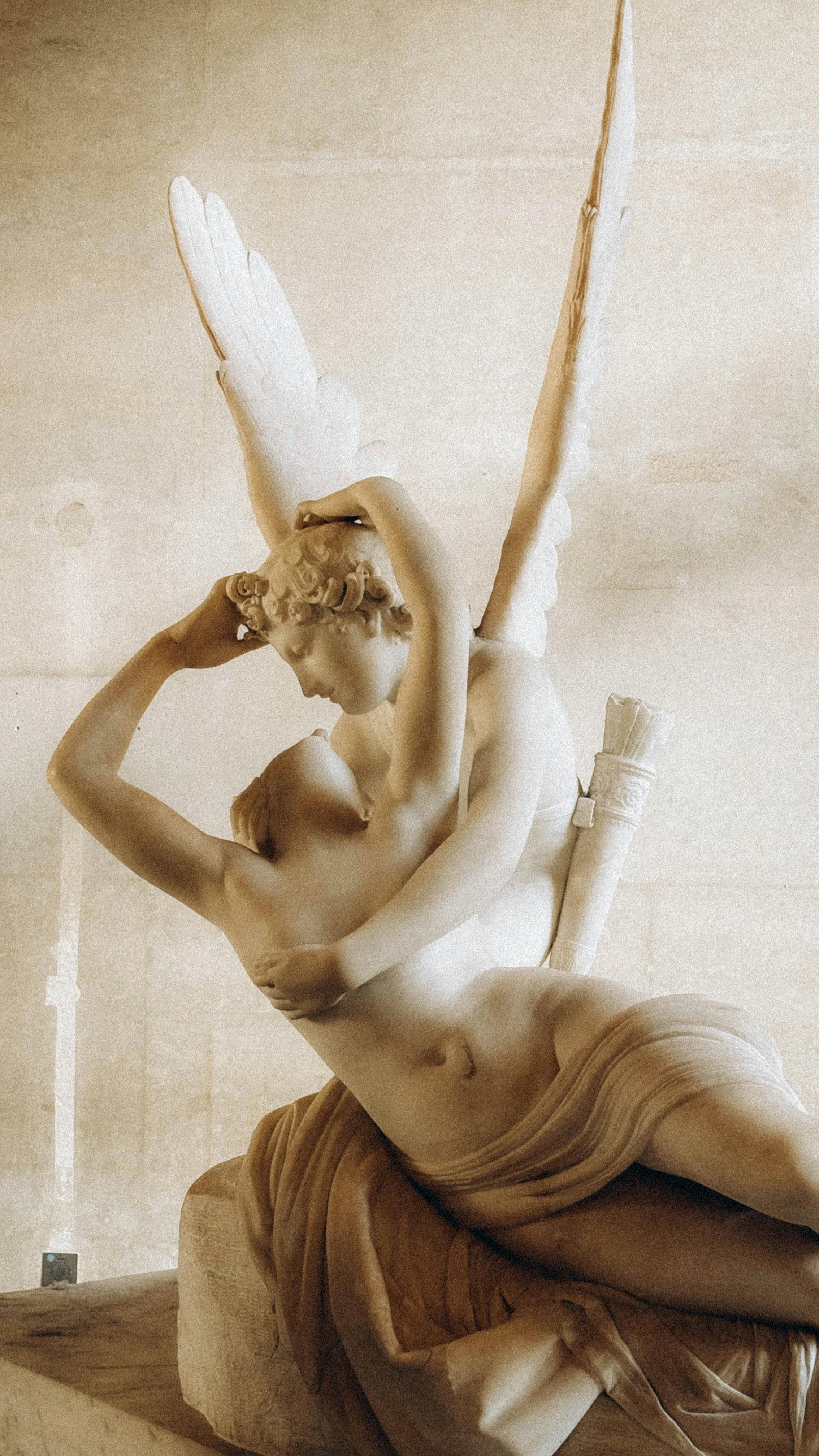
Editor’s note: the stock photos in this post depict statues on display at the Louvre
The Tearoom Library, No. 008 — Piranesi
Author: Susanna Clarke
Genre: Fantasy
Rating: ★★★★★
Follow-Up Reading:
The Ocean at the End of the Lane by Neil Gaiman
(for a quiet, memory-soaked story where reality and the unseen blur)Jonathan Strange & Mr Norrell by Susanna Clarke
(for an expanded view of Clarke’s fascination with magic, knowledge, and perception)The Night Circus by Erin Morgenstern
(for a richly imagined, enclosed world, much like the quiet, immersive experience of Piranesi’s House)

Books with Living Atmospheres
Piranesi is a unique novel. One mark of a good book is that it lingers in the minds and hearts of readers long after they have reached the final page. When I first read Piranesi a few years ago, I learned that—every once in a while—a book will come along that’ll swallow me entirely, whisking me off even in sleep.
Piranesi is well-known for its atmospheric nature. At times, it felt to me as if the real protagonist in the novel was the House, rather than Piranesi. Susanna Clarke took great care to paint with words a vast, mysterious, shadowy location. It is near the sea—so near, in fact, that when the tide is high, the ocean spills into these very halls, as if they were lovers meeting for a rendezvous.
The first time I read Piranesi, Clarke’s descriptions had been so carefully crafted that, when I crawled into bed, I felt as though I were wandering the House. For nearly a week afterwards, I dreamed that I was exploring cavernous halls with bizarre and noble statues. I can remember the shadows in those dreams: they played an important part in making it beautiful, making it true.
Few other books have captured me with their atmosphere in this way. Mexican Gothic by Silvia Moreno-Garcia came close this year, though I did not visit her more sinister house in my dreams. For this I can only be thankful, as the house in Moreno-Garcia’s novel isn’t a place I would like to find myself in sleep.

Caring for the Statues
Piranesi is a sympathetic character because he is devoted to the only purpose that he can find for himself. He tends to the halls of the great House, acquainting himself with the bizarre statues, befriending wild albatrosses, making the best of what he has—and what he does not have—until he is even happy in his isolation.
At the start of the novel, it’s clear that Piranesi is uncertain of how he arrived at the House and how long he’s been there. He recalls no other world. In place of human interaction, he befriends statues and creates histories for the people that they represent. He feeds the wild birds and even tends to the remains of other humans, people he has never met who found their way into the House at some point but couldn’t make it out.
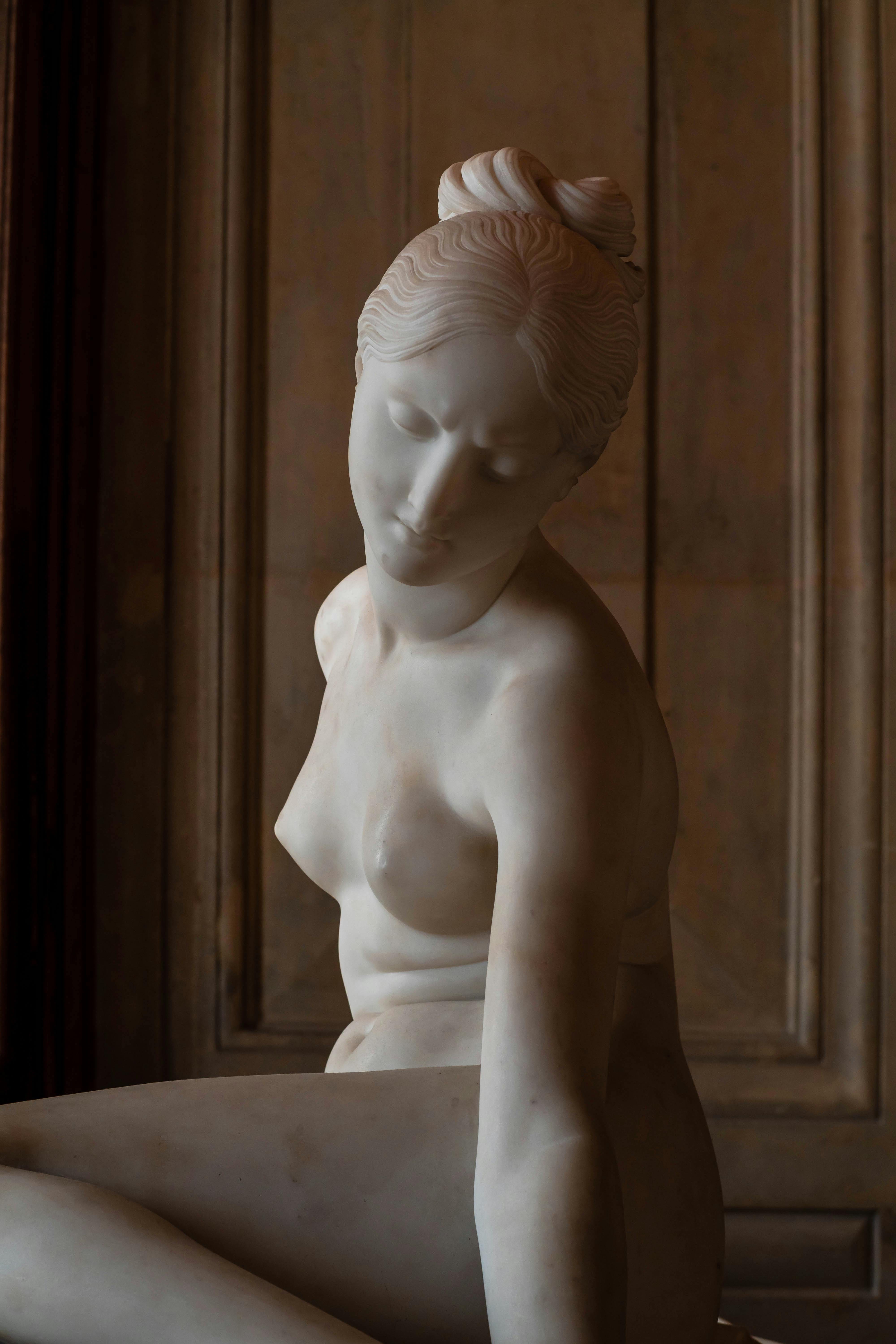
When he senses there is going to be a high tide that might threaten the deceased, he moves them to places where they will not be disturbed by water. They do not talk back to him, but he treats them as though they were his friends. It is both touching and heartbreaking to read of the tenderness with which he does these things.
He has occasional interactions with one other human, a man that he calls the Other, for no other name has been given by which to address this man. The Other is obsessed with collecting hidden knowledge about the House, and he relies heavily on Piranesi’s knowledge to fulfill this goal.
However, the Other does not live in the House; it is Piranesi who wanders the halls alone, while the Other only visits occasionally.
Houses that are Protagonists
Novels like Piranesi and Mexican Gothic have a fascinating quality: the locations in which they take place become more than brick and mortar. The houses have personalities; a person who spends enough time inside of them would get to know them as if they were people, understanding their likes and dislikes.
Hogwarts, the school in the Harry Potter series, is another excellent example. The castle has not one, but several different personalities, not only because of ghosts that wander the corridors, but also the talking portraits and hidden passages.
A well-crafted character thrives when placed in a setting that seems to have its own beating heart. This could be due to layers of history, unpredictable weather, or the area surrounding it—are there haunted woods? Is there an ocean that intrudes at will, such as the one in Piranesi?
World-building should not be taken lightly when writing a story. If a world is created that’s vivid enough to creep into the reader’s dreams, one knows that their story has the potential to become a masterpiece. I have returned to many books because I wanted to experience again the world constructed inside of them.
World-building requires a good deal of attention and practice in order to achieve the realism I am describing. It means constructing backstory, not only for the characters, but for each brick and every window-pane. Telling a good story takes time and dedication.
When world-building, we want to approach the process like explorers who found a door by chance. We will open it and know nothing of what we’ll find inside. We must be just as enchanted by each nook and cranny as our readers are meant to be.

My Only Enemy, My Only Friend
Piranesi’s innocence—his gentle naivety throughout most of the novel—warm readers to him. Even as he begins to suspect that the Other is not, in fact, a friend, he cannot bring himself to hate him. Instead, he searches for explanations, quietly excusing what cannot easily be excused, because the alternative feels unbearable.
From Piranesi’s point of view, we begin to understand how easily the boundaries between friend and abuser can blur. He is being misled, contained within carefully constructed lies, yet lacks the language to name what is happening to him. The Other is, after all, the only human presence he has known for as long as he can remember. He gives gifts—shoes for walking, tools for mapping—and so even harm arrives dressed as care.
To accept that the Other has acted cruelly would mean accepting something devastating: that he’s never known kindness at all. And so, for the sake of coherence, he bends his thoughts around this contradiction, searching for grace where none is easily found.
When the Other finally meets his end, there is no sense of victory. Instead, there is grief—quiet, disorienting. Piranesi has lost his only enemy, and his only friend.
As with the other remains in the House, he tends to the Other’s body with care. He finds a sheltered place in the halls and lays it to rest with dignity. His instinct is still to care.
Only now, there is no longer any uncertainty about what he is caring for.
A Note from the Margins
Piranesi is not the sort of novel that merely entertains. It settles somewhere deeper—beneath thought, beneath language—and begins, quietly, to build. It creeps into one’s dreams, and lingers there, almost lovingly, among the statues and the albatross.
If I sit long enough with it, I can almost believe there are halls within my own mind, lined with statues of everything I have loved and feared. As a writer, I find myself tending to them, much as Piranesi tends to his House.
For members of the Tearoom Circle, I’ve opened my reading journal and copied a passage written just after I finished this book.
