


Visit the library index for more reviews!
The Tearoom Library, No. 049 — Marilyn and Her Books
Author: Gail Crowther
Genre: Literary Biography / Cultural History
Rating: ★★★★★
Follow-Up Reading:
Marilyn Monroe by Barbara Leaming
(for a more complete picture of Marilyn’s life and inner development beyond the literary lens)Fragments: Poems, Intimate Notes, Letters by Marilyn Monroe
(for Marilyn’s own voice—her reading lists, notes, letters, and the interior literary world she built for herself, in her own words)Blonde by Joyce Carol Oates
(for a fictional, psychologically immersive reimagining of Marilyn Monroe’s life, exploring the creation of “the Blonde” as myth, and the tension between public image and private fragmentation)
The Literary Lives of Women
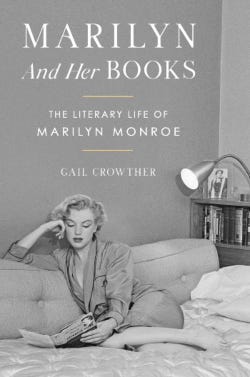
When I found out through Substack that a book had been written about Marilyn Monroe and her reading life, I had the eerie sense that, once again, the literary gods had summoned me. The Tearoom has lately found itself returning again and again to historical women and their inner worlds, especially the books they read.
You only need to visit my archives and scroll back a little to find my fixations on the literary lives of Jackie Kennedy, Beatrix Potter, Abigail Adams, Jane Franklin—different women from different eras who had little in common, yet who are not so far apart when viewed through the lens of reading and intellect. Jackie Kennedy and Abigail Adams both occupied the role we would now call First Lady, and both, in different ways, navigated the expectation that a president’s wife should remain ornamental rather than intellectually visible.

The author of The Tale of Peter Rabbit, Beatrix Potter lived during the Victorian era, when women were not encouraged to write and publish books; doing so risked social censure rather than recognition, because women were not expected to be taken seriously as thinkers.
Benjamin Franklin’s sister, Jane, was born into a world where women were not expected to be educated in any formal sense. Franklin cared enough for her to give her private lessons before his own public life expanded. Jane became politically opinionated, and her surviving letters—though peppered with spelling errors—reveal a mind that rarely stilled and a heart that always reached beyond its confines.
Marilyn Monroe Joins the Circle
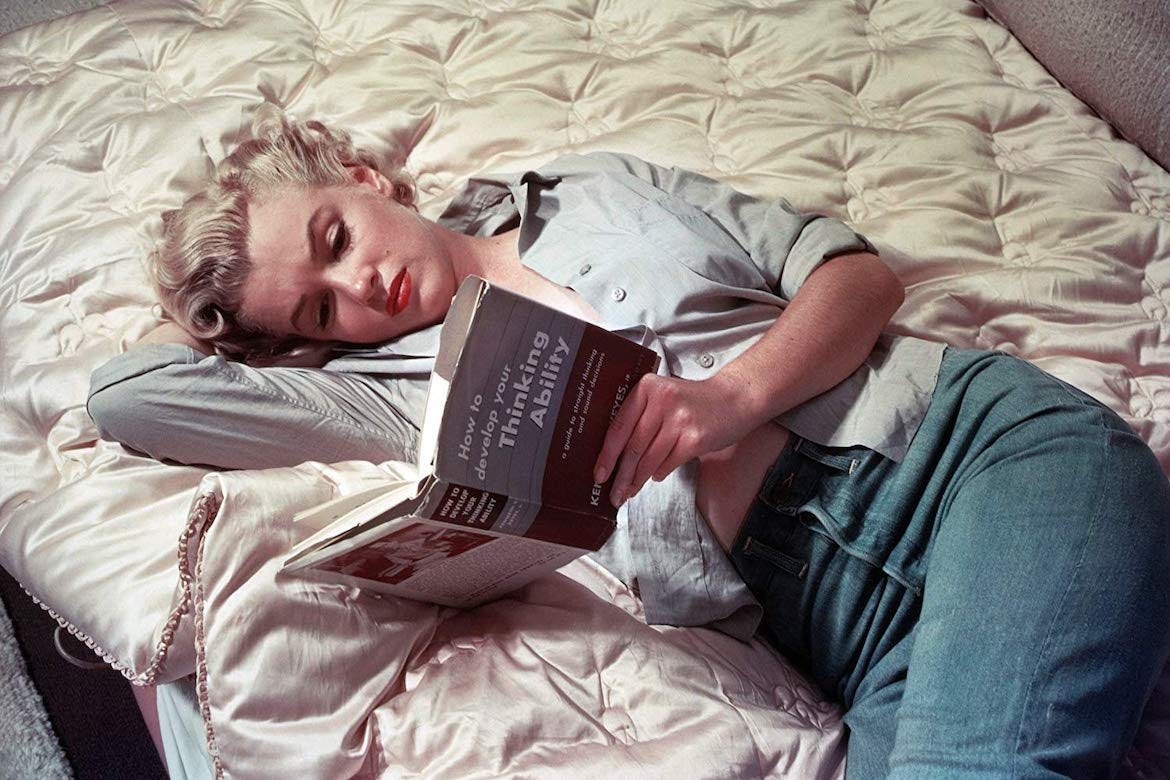
I confess that I hadn’t thought to add Marilyn Monroe to this list, not because I believed her unintelligent, but because her fame has been so firmly fixed as that of a Hollywood icon whose achievements were outward rather than contemplative. On discovering that biographer Gail Crowther had written a book about Marilyn’s personal library, it felt as though a piece had fallen into place in a puzzle I did not know I was holding—a piece I didn’t know was missing—and I was simply desperate to read it.
I reached out to her on Substack and asked if I might receive an ARC to review. She very kindly responded in the affirmative, and I finished Marilyn and Her Books over the course of a day and a half (I had to stop to sleep, unfortunately). And how delighted I am to know Marilyn better.
What I found, as I read, was not a departure from the women I had already been tracing, but a deepening of them. Marilyn did not feel like an exception to the pattern so much as another variation of it—another woman negotiating intellect in a world that preferred her legible in other ways.
The difference was only that her “library” had been less publicly legible, more easily overshadowed by the brightness of her image, and so the act of reading her through books felt like recovering a quieter layer that had always been there.
Reading Gail Crowther’s Marilyn and Her Books
The biography itself reads to me as much more than a portrait of Marilyn. From the first chapter, Crowther is weaving a beautiful ode to the concept of a personal library. For those of us who understand the beauty and power of books, our personal libraries—the stories that we choose to collect—can speak volumes, not only about us, but about what we hope to become.
Crowther points out that even the books we collect but haven’t read yet add shades to this unique portrait. The TBR list represents dreams that we entertain, places we wish to visit, figures we want to know more about, and skills we want to learn. On the other hand, there are the books we’ve left marks on: the ones that we read time and again, writing in margins and underlining favorite passages. Those are the books that grew up with us, because we might first have read them as children, then returned to them for comfort as life became more complicated.
A book-lover knows that the personal library is a meaningful way to know a person and the colors that splatter their inner walls. For this reason, a biography focused on Marilyn Monroe’s books was bound to be interesting from the start. As Crowther points out several times in her book, Monroe was forced into the trope of the ‘dumb blonde’ so effectively that the public often questioned whether she could read at all. In spite of her deep literary interests and serious reading life, it never occurred to many journalists to ask about her favorite books.
I have read biographies about Marilyn Monroe before (in particular, Marilyn Monroe by Barbara Leaming). They were interesting, but I do not recall them approaching their subject from this angle. Crowther’s book is an unusual biography of Marilyn Monroe, a masterwork that left me with a heart both tender and heavy by the end.
I felt that Marilyn was someone I could have known and conversed with. I felt rage at the injustice that was done to her—and which, in subtler ways, is still done to people (women especially) today. As soon as I finished Marilyn and Her Books, I went to find my mother, who is also a fan of Marilyn Monroe, and we talked about her. We brought her back to life with our words, our imagined memories, our shared admiration.

Marilyn Monroe was no ‘dumb blonde.’ Gail Crowther’s book dismantles that stereotype with patience, care, and attention to Marilyn’s inner world. I’m eager to see more readers encounter this version of her: thoughtful, curious, literary, and profoundly human.
A Note from the Margins
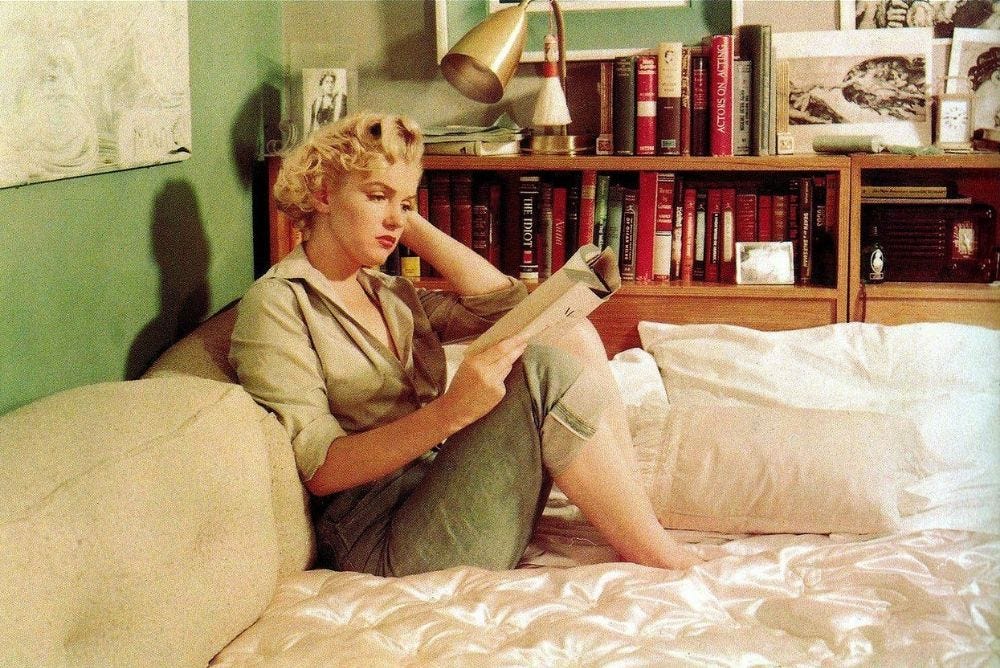
What lingered with me most after finishing Marilyn and Her Books was not simply Marilyn herself, but the private world she built around reading. There is something deeply moving about tracing a life through the books someone carried, annotated, returned to, and kept close beside them.
Below are a few additional reflections from my own margins while reading Crowther’s biography.
