


Visit the library index for more reviews!
The Tearoom Library, No. 051 — Theo of Golden
Author: Allen Levi
Genre: Literary Fiction / Contemporary Southern Fiction
Rating: ★★★★★
Follow-Up Reading:
The Storied Life of A.J. Fikry by Gabrielle Zevin
(for another story about the quiet ways one person can transform a community)Gilead by Marilynne Robinson
(for thoughtful reflections on grace, attention, and the sacredness of ordinary life)Girl with a Pearl Earring by Tracy Chevalier (my review here)
(for observation, artistic vision, and learning how to see. )
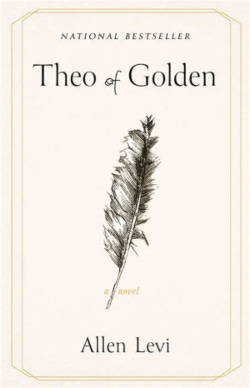
Covers are Deceptive
Humans rely on visual cues a great deal of the time to make choices. Appearances make a difference in how we perceive things—from places to live, to people we can trust, and books that we should read.
Of course, we all know that appearance is not always a fair or accurate measure by which to judge a soul. The person with pristine teeth and shining skin might have a rotten attitude. Someone who goes through life unnoticed could be the kindest of neighbors.
I have learned that a book’s cover art does not always reflect the story behind it. Lovely covers can be used for lackluster stories, while understated cover art can be the quiet face of a tale that will change us for life.
Theo of Golden by Allen Levi reminded me of this. I reached for it knowing only that it had been a bestseller for a long time. Otherwise, I wasn’t sure what to expect. Something with such a plain cover could contain anything.
I hemmed, hawed, and read other things before finally getting to it. I’m glad that I did. Theo of Golden is like chicken soup for the weary soul.

“Call Me Theo”
I found Theo of Golden to be a surprising book because the cover is so quiet. It features a black feather against a neutral background. Both elements are understated enough to represent almost any kind of story.
Such a cover might be overlooked beside the colorful jackets of other contemporary bestsellers. Perhaps that quiet cover art was chosen intentionally. After all, hope itself is often quiet.
This is, indeed, a novel about hope and neighborly love. If we paused on occasion to greet our neighbors, whose presence may seem ordinary as Theo of Golden’s cover, a surprising amount of healing could take place.
Theo of Golden is the sort of book that finds you when you need it. It offers refuge after the bold colors, dramatic twists, and constant noise become too much. Drama and high stakes make for wonderful reading, but sometimes we need gentleness. After all, we live in a world that can be rough and unfriendly.
The Gift of Attention
The protagonist is an elderly Portuguese man who, when asked for his name, introduces himself simply as “Theo.” If pressed for his full name, he deflects by explaining that it is difficult to pronounce. He turns the conversation around by asking the other person a question about themselves, and then—
Then, he just listens.
Do you know many people who are willing to do that?
Theo is one of those rare individuals who are willing to give the greatest of gifts: attention. He is happy to sit with strangers and ask about their struggles. It does not matter where they have been, what they have done, or where they are going. Theo wants to let them speak. What’s more, he wants to be friends with them afterward.
He becomes almost like a mirror for people opening up to him. They get the sense that he can see everything about them without judging. The man himself remains a mystery: hardly a detail can be coaxed from him about his own life.
Theo has mastered the art of evasiveness. People eventually stop asking about his background.

As the novel progresses, Theo’s story gradually unfurls.
It takes shape before our eyes like watercolor spreading across paper. We learn of his childhood in a poor Portuguese village. We see the exact moment he realizes he wants to become an artist, which is so beautiful that I want to share it:
At first, Theo could not tell what the fisherman was doing. As he stepped closer, however, he realized the man was painting a picture, standing at an artist’s easel, facing west. … Theo stood behind the stranger, with only a few feet between them, and watched as the western horizon took shape in miniature on the canvas. With each brushstroke, the fisher-painter’s sinewy arms rippled, as they did, no doubt, when he pulled at his net or fishing lines.
In both cases, the man was in quest of a catch. At the moment, he was intent on catching the sky in front of him.
We learn about mistakes Theo has made, repented of, and made peace with. They shaped him into a healer for other souls. This is natural: the wisest people are rarely those who have avoided suffering.
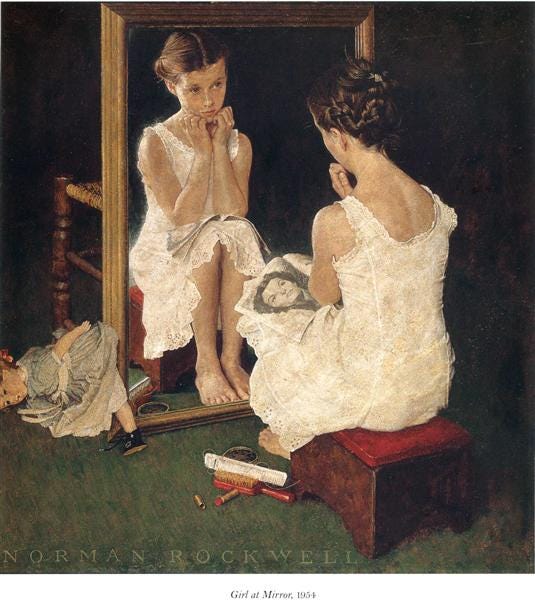
Theo’s fascination with beauty and goodness did not come easily. Like most forms of wisdom, it came by means of pain and hardship. We learn difficult lessons when forced to confront our flaws.
This sometimes means that we must run away from all we once knew. In Theo of Golden, Theo has done exactly this. No one can understand why, of all places, he chose the small southern town of Golden. It is a far cry from the bustling cities from which he came.
There is a reason, of course, which I will not spoil for you. In the end, that reason feels less important than what Theo ultimately becomes for the people of Golden.
He becomes a friend to all.
What Theo Teaches Us
The plot at face value is that Theo purchases portraits of Golden’s residents which are for sale at a cafeteria called the Chalice. He then gifts these portraits to the people depicted in them.
To me, he does something much greater. He’s not simply gifting these portraits to their subjects. He notices the person behind the artwork; he sees their soul.
Many residents of Golden carry burdens that have become invisible through familiarity. Their griefs, disappointments, fears, and regrets have been folded into daily life so completely that no one thinks to ask about them anymore.

Theo asks. Not only that, but he listens without hurrying people toward a conclusion.
He does not treat conversation as a competition, nor does he wait impatiently for his turn to speak. He creates a space in which people feel safe enough to tell truths about themselves.
In another novel, such a character might feel sentimental or unrealistic. Here, Theo’s kindness is believable because it has been earned. His compassion does not come from naïveté but from experience. He recognizes suffering because he has suffered himself.
Theo reminds the people around him that community begins with attention. Relationships are strengthened not through grand gestures but through the patient habit of caring enough to notice.
Love Is at the Core
Theo’s eye for beauty becomes evident to everyone he encounters. One of the most memorable passages in the novel occurs when he is asked what he believes makes for good art.
His reply is surprising:
“It might not make a lot of sense, but for anything to be good, truly good, there must be love in it. I’m not even sure I know fully what that means, but the older I get, the more I believe it. There must be love for the gift itself, love for the subject being depicted or the story being told, and love for the audience. Whether the art is sculpture, farming, teaching, lawmaking, medicine, music, or raising a child, if love is not in it — at the very heart of it — it might be skillful, marketable, or popular but I doubt it is truly good. Nothing is what it’s supposed to be if love is not at the core.”
Love. So many of us move through life without understanding the meaning of this word. There are different kinds of love, as C. S. Lewis explains in The Four Loves. I had never considered that love might be necessary to create truly beautiful art, but Theo’s observation rings true.

When people love what they do, they make time to refine their craft. They push through artistic block until color spills as though from an uncapped paint tube. When a subject is loved, those who encounter the finished work can often sense it.
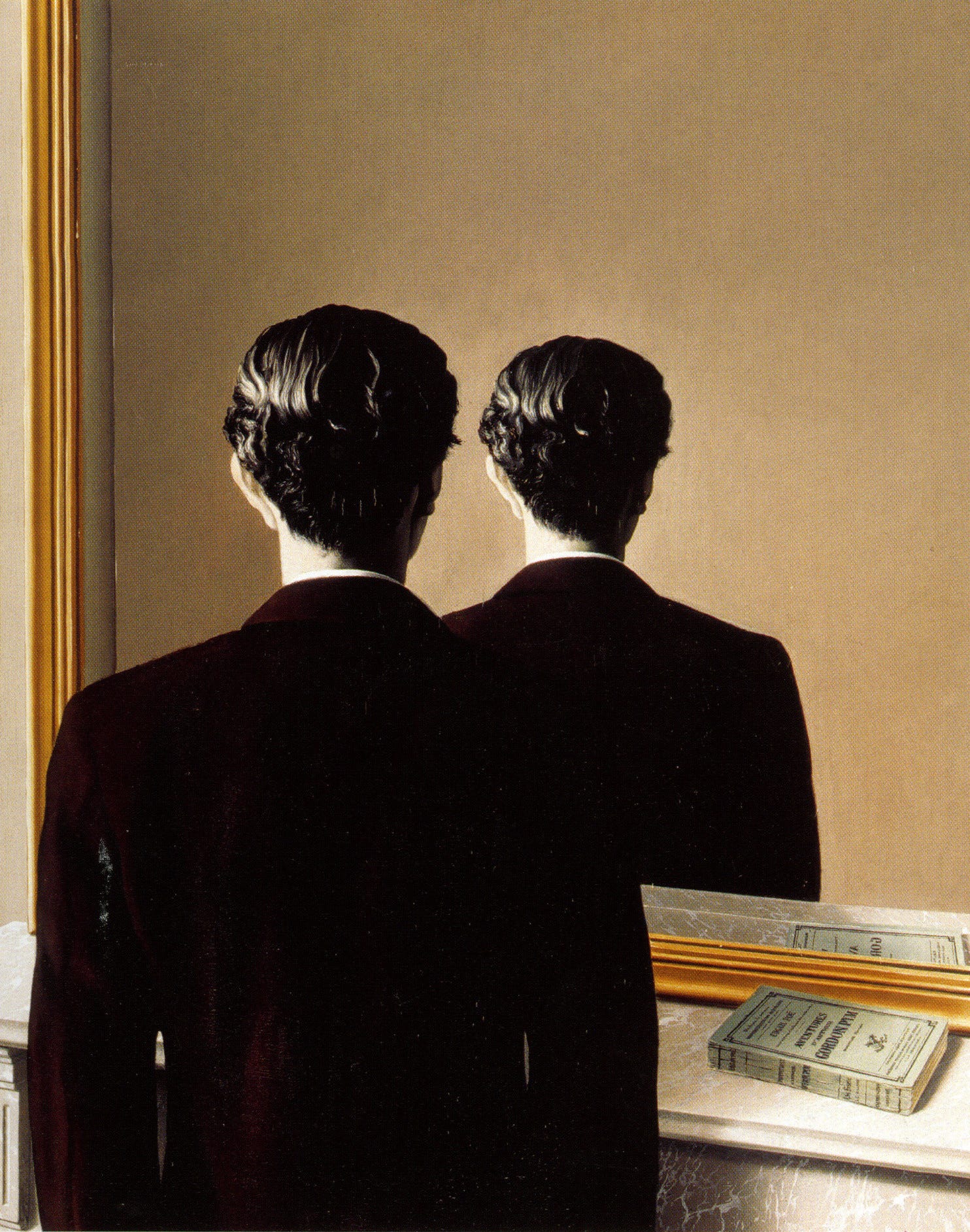
Theo’s words apply not only to painting but to every form of creation. Whether we write, teach, garden, parent, or build, love transforms ordinary work into something deeper.
A Note from the Margins
We live in a culture that celebrates visibility, yet many people are starving for something deeper than being seen.
They want to be known. Theo offers exactly that.
The rest of this essay is for members of The Tearoom Circle. Together, we’ll linger over one of the novel’s deeper themes—something that has become increasingly important to me as I’ve taken on the challenge of learning to draw this year.
We will explore the relationship between art and literature, and the quiet ways love transforms both those who create it and those who receive it.
