


The Tearoom Library, No. 064 — Dear George, Dear Mary
Author: Mary Calvi
Rating: ★★★★★
Genre: Historical Fiction; Historical Romance
Recommended Reading:
My Dear Hamilton by Stephanie Dray and Laura Kamoie — A richly imagined novel of Eliza Schuyler Hamilton that reveals the sacrifices, resilience, and private life behind one of America’s most influential founding families.
America’s First Daughter by Stephanie Dray and Laura Kamoie — The story of Martha Jefferson Randolph offers another intimate portrait of love, loss, and duty during the nation’s earliest years.
Ladies of Liberty by Cokie Roberts — An engaging nonfiction account of the extraordinary women who helped shape the early United States, making it a perfect companion to novels set during the Founding Era.
Reading in Time
There is a book for every person, and a book for every season. Even readers who pay little attention to seasonal trends have likely noticed that certain stories return each year. Holiday novels fill the winter shelves, while spooky tales begin appearing long before October arrives.
For those of us who embrace the changing seasons, literature deepens their magic rather than distracting from it. I revisit A Christmas Carol every Christmas Eve, allowing even the quietest moments of the day to be transformed by story. A perfect day can become even more memorable when accompanied by the right book.
July, for many readers, is a season of history. The Fourth of July lasts only a single day, yet the month itself often inspires reflection on America’s past and the lives that shaped it.
Each July, I find myself reaching for books about America’s founders, presidents, and First Ladies. This year, several have been waiting patiently on my Kindle, and over the coming weeks I’ll be reading—and writing about—them here. If you enjoy thoughtful historical fiction and American history, I hope you’ll read along this month.
I also have many nonfiction books about early American history that I hope to share. Last year I wrote a series of reviews about America’s presidents and their families, and I am excited to revisit those books with new readers, as they were truly a labor of love.
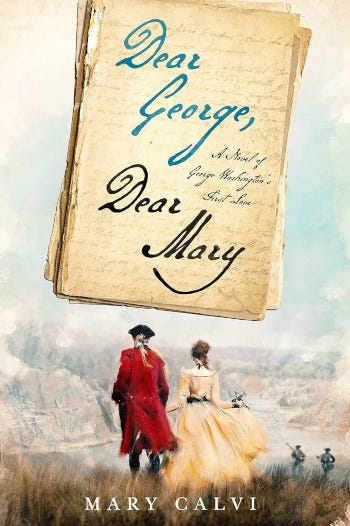
As for historical fiction, Dear George, Dear Mary by Mary Calvi is a perfect place to begin. It demonstrates how certain people and moments endure across centuries—and how, through the careful imagination of historical fiction, they can feel vividly alive once again.

The Tale of a First Love
History remembers George Washington as the general who led the Continental Army, the first President of the United States, and the man who willingly surrendered power when he might have become a king. Yet the private man behind the carefully constructed public image remains elusive. Washington left few traces of his inner life, making every surviving personal letter especially valuable.
One surviving letter hints at a heartbreak history has never fully explained.
Before he married Martha Custis, Washington appears to have fallen deeply in love with a young woman named Mary. The surviving correspondence makes clear that the relationship ended in disappointment, but offers almost no explanation why. From this small historical mystery, Mary Calvi constructs a poignant love story in Dear George, Dear Mary.
Calvi begins with the historical facts we know. George Washington never had children of his own. By marrying the wealthy widow Martha Custis, he became stepfather to her two surviving children, though both would die young from illnesses common in the eighteenth century. It remains one of the quieter ironies of American history that the man who came closest to becoming America’s king left no direct descendants.
From there, Calvi imagines what might have happened between George and Mary.
In the novel, the pair fall deeply in love just as tensions between the American colonies and the British Empire begin to escalate. They intend to become engaged, but Washington’s military duties repeatedly pull him away. His letters fail to reach Mary after being intercepted, leaving her to believe he has abandoned her. Under growing pressure to marry before she is considered “on the shelf,” Mary eventually accepts the proposal of Captain Morris. When George finally returns, he is too late. Fate, rather than a lack of love, has separated them.

Truths that We All Know
What makes the novel so affecting is not simply its romance, but its understanding of timing. George and Mary become symbols of those moments in life when happiness slips beyond our reach through circumstances no one can control. Most readers have memories of seasons when life felt full of promise before events carried them elsewhere. Calvi captures that universal feeling with remarkable tenderness.
Her extensive historical research gives the novel its credibility. She consulted libraries, archives, and surviving correspondence, grounding her fiction in careful scholarship while allowing herself enough imaginative freedom to fill the many silences history leaves behind. The result feels convincing rather than speculative.
Perhaps the novel’s greatest achievement is the way it humanizes one of America’s most iconic figures. Historical heroes often become monuments, stripped of the ordinary emotions that shaped their lives. Calvi reminds us that even George Washington experienced longing, disappointment, uncertainty, and heartbreak. Knowing this does not diminish his achievements; instead, it makes them feel more attainable. Great lives are still lived by ordinary people.
Dear George, Dear Mary is an elegant work of historical fiction that offers readers an alternative vision of a familiar life. Whether or not its imagined romance resembles what truly happened matters less than the emotional truth it uncovers. In giving Washington a believable inner life, Mary Calvi reminds us that behind every great figure in history stood a person capable of loving, losing, and wondering what might have been.

A Note from the Margins
For paid subscribers, I’ve left a few notes in the margins about the quiet sadness at the heart of this novel—and why it lingered with me long after I turned the final page.
