


Especially with older art, there is more to a painting than a pretty picture.
People with trained eyes can pick out messages arranged with each color and brush stroke. The paintings considered immortal now, became so because they revealed something about humanity.
Art was a tool by which we captured moments and messages. They whisper their ideas for us to hear, even today.
However, one still needs a trained eye. If we do not know what to look at, we might miss the message.
One learns to read a book, and one learns to read a painting. It’s not shameful to admit when we need a teacher. Art experts and scholars exist to help fill in those blanks.
When we go to an art museum, we’d best be prepared. We make the most of these visits by familiarizing ourselves with stories we’re going to see.
Like any other subject, art deserves good teachers. Vermeer’s Hat by Timothy Brook does this, in part, for us. It offers a course on the work of the Dutch artist.
Most famous for his masterpiece, Girl with a Pearl Earring, Vermeer had many other paintings. He used art as commentary, as well as a record of, the time in which he lived.
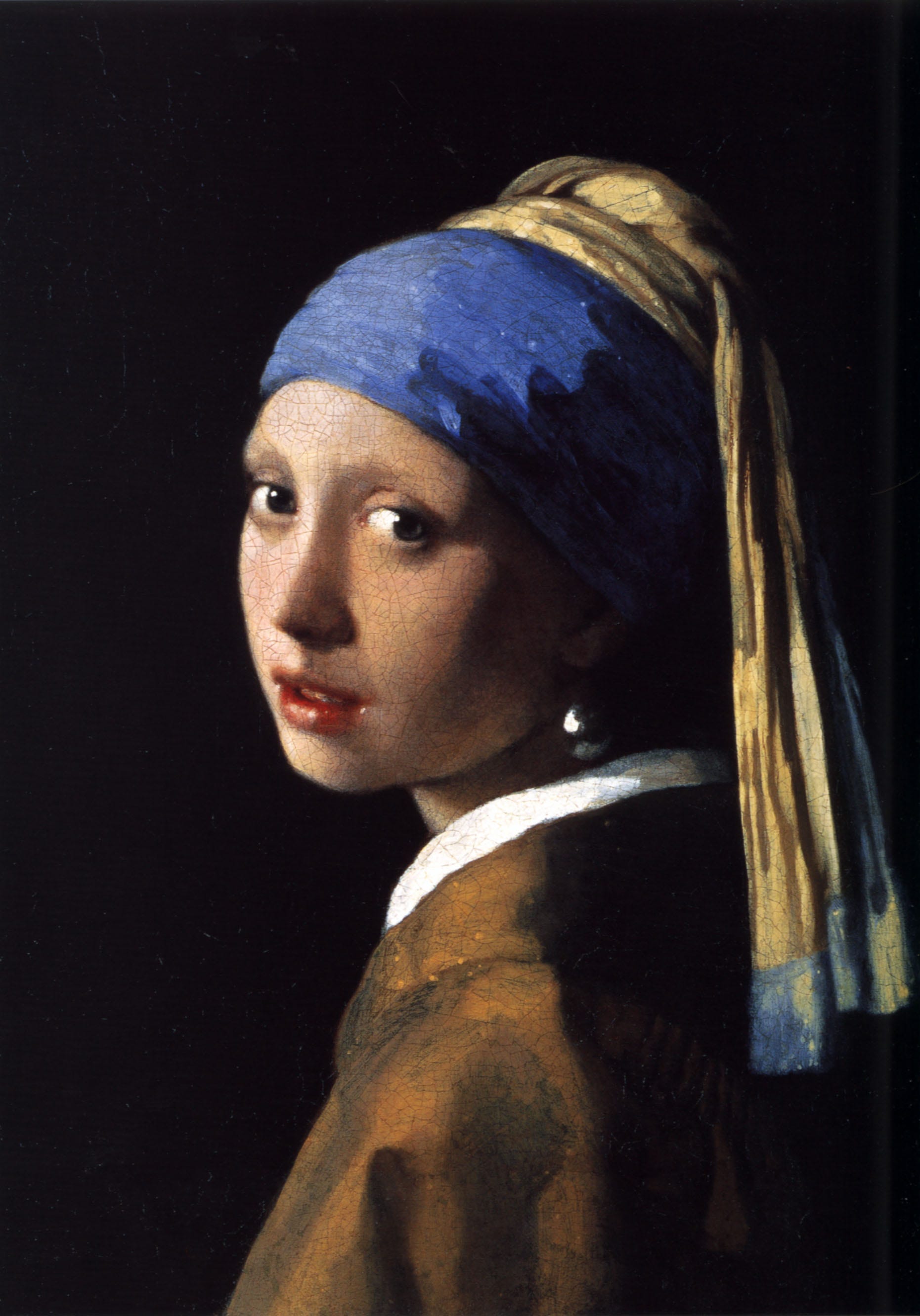
The seventeenth century was laden with discoveries. These ranged from new forms of technology, alternate shipping routes, and cultures. All of these things were captured by Vermeer, in some form.
In his introductory chapter, Brook reflects on Vermeer’s View of Delft. He offers a summary of the greatest inventions of that age:
The English polymath Francis Bacon in 1620 selected for special notice three “mechanical discoveries” that, in his view, “have changed the whole face and state of things throughout the world.”
One such discovery was the magnetic compass, enabling navigators to sail out of sight of land and still guess where they were. Another was paper, which permitted merchants to keep the detailed records needed for multiple transactions and sustain the heavy correspondence that trade over long distances demands. The third discovery was gunpowder.
Without the rapid advances arms manufacturers made in ballistics technology in the sixteenth and seventeenth centuries, European traders abroad would have been hard pressed to overwhelm local opposition to unwanted trade arrangements and protect the spoils of commerce.
The compass, paper, and gunpowder. These three things are very different from one another. However, if we reflect on how they affected our world, we realize they are different but equally powerful.
Without the compass, sailors and those in trade would not have been able to reach their destinations. Without paper, not only would there not be books, but maps, important documents, and sketches would vanish.
Gunpowder was vital for those who lived in a world that was, generally, so hostile. Ideally, guns and gunpowder would never have been needed. In truth, there has always been a need for self-defense.
In another chapter, Brooks offers commentary on Vermeer’s Officer and Laughing Girl, which depicts an apparent scene of courtship.
The expression on the girl’s face is striking, but we find our attention drawn afterward to the gentleman across from her. It’s impossible not to, for he is wearing an extravagant, velvet hat.
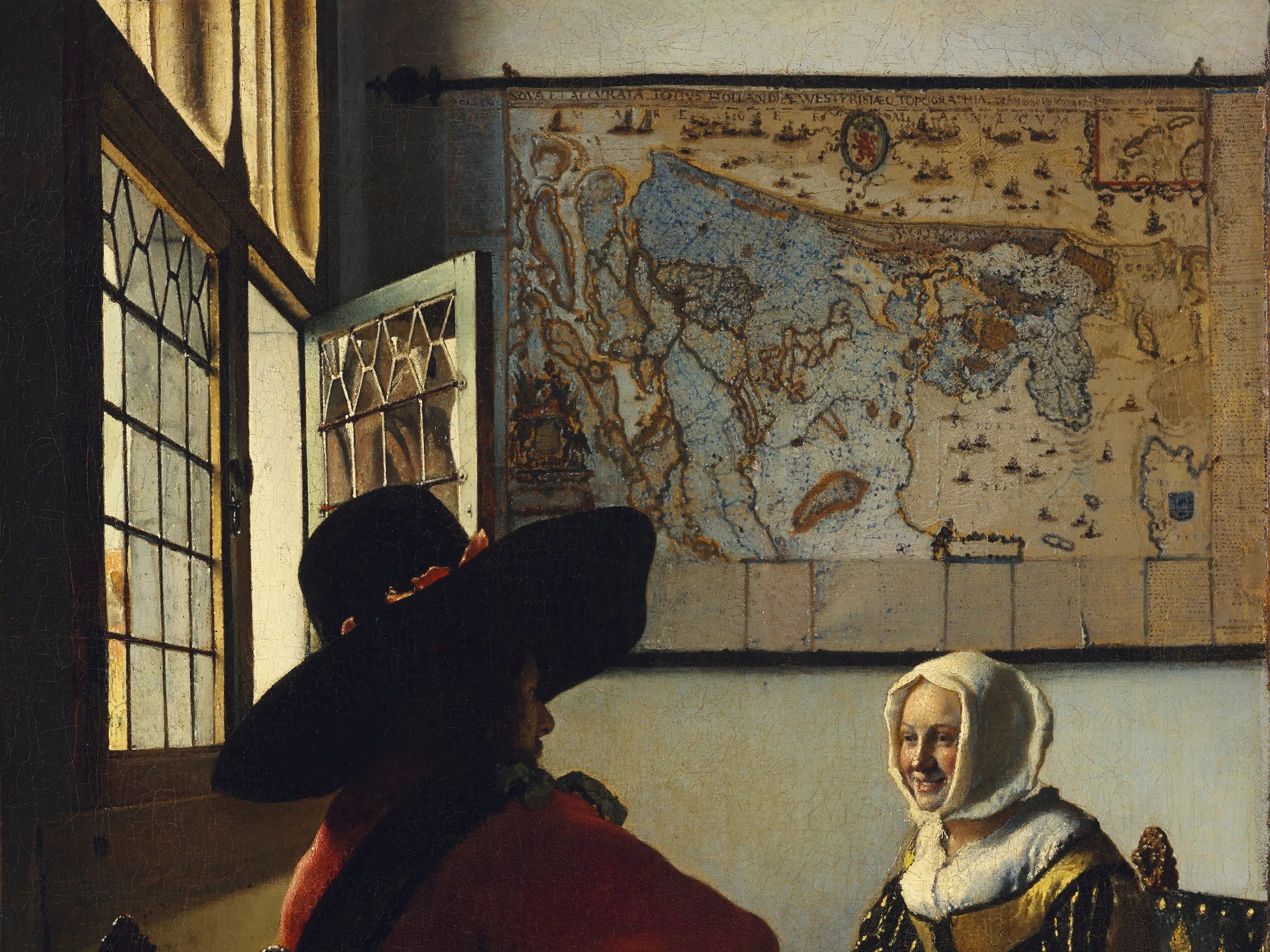
In that time, hats were more than accessories. Brook speculates that Vermeer must have owned many:
No … [Dutchman] of his generation and status went out in public bareheaded. … A poor man made do with wearing a slouch cap known as a klapmuts, but the better sort flaunted the kind of hat we see in Officer and Laughing Girl.
It was a question of manners. Hats indicated self-respect. They often dropped hints of a man’s trade and social status.
In the context of this painting, where we assume that the officer is courting the woman, we can understand why he seems to have worn one of his best:
A courting man did not go hatless. The custom for men to remove their hats when entering a building or greeting a woman (a custom generally forgotten today) was not yet being observed. The only person before whom a European gentleman bared his head was his monarch, but as Dutchmen prided themselves in bowing to no monarch and scorned those who did, their hats stayed on.
Vermeer’s Hat is not a book about Vermeer. It’s about the world he lived in, which was changing in his lifetime.
From gentlemen and the hats they wore, to the perilous challenges of trade with China, it tells tales of multiple people.
These people had little in common, except for the century in which they were alive.
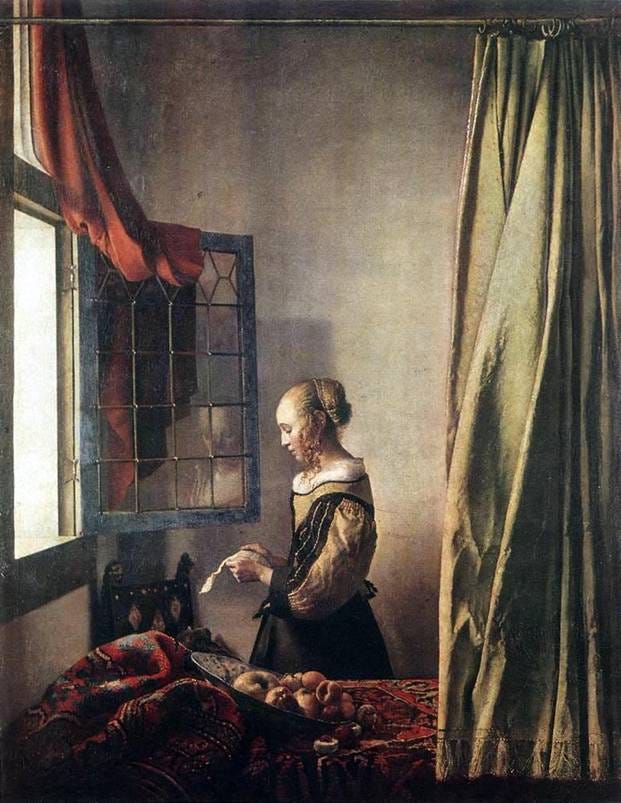
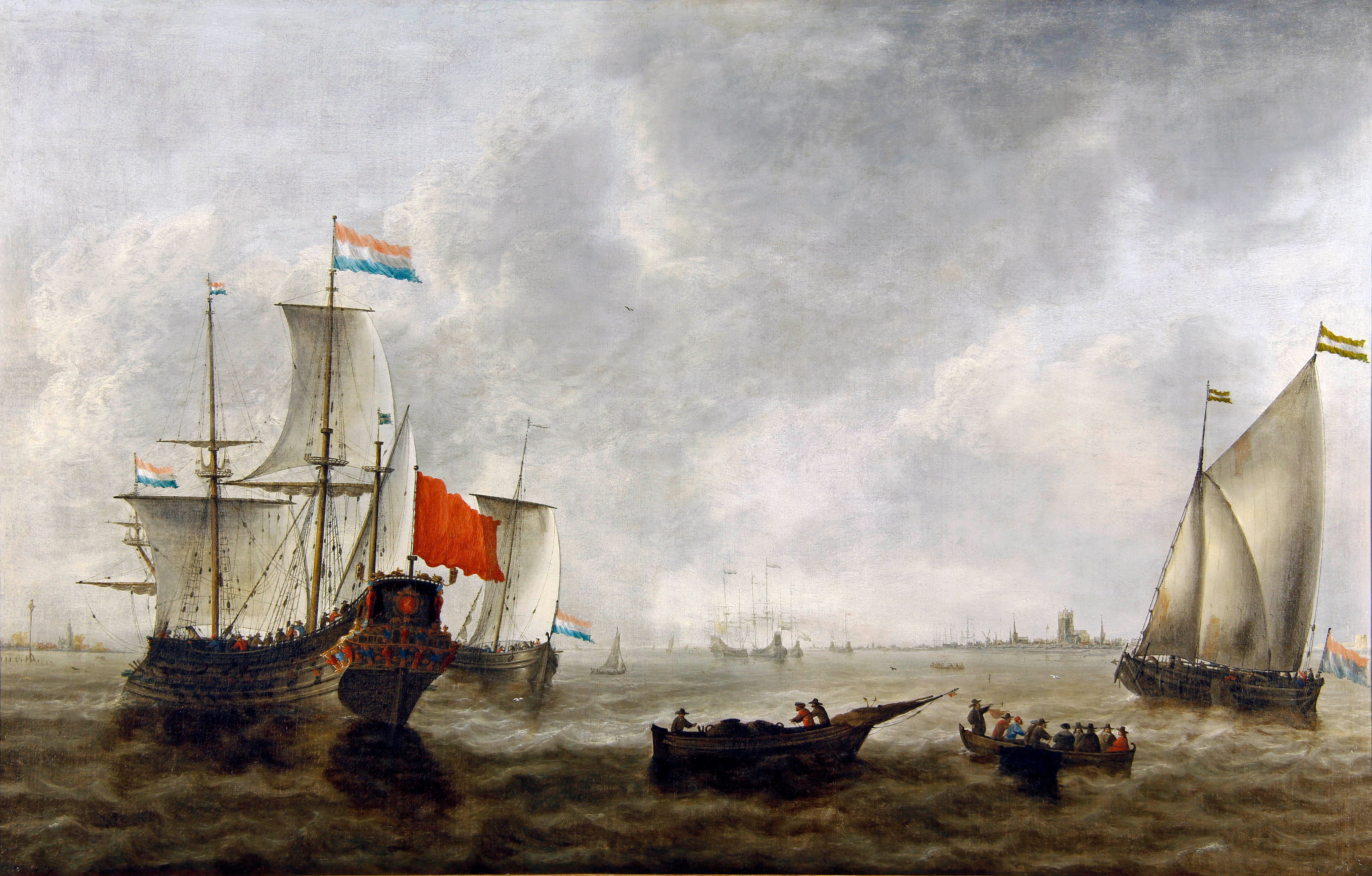
Vermeer’s Hat paints a vivid picture of a sailor’s life. This is an era during which traffic at sea bustled. Shipwrecks were common, and while the ‘stranded sailor’ is now a caricature used in cartoons, it did happen—often.
I’ve been fascinated with the subject of stranded sailors, ever since I finished Nathaniel Philbrick’s In the Heart of the Sea. Timothy Brook introduced me to a new form of ‘being stranded’.
In the penultimate chapter, we learn about a Dutch sailor named Weltevree, who had become stranded in the mysterious land of Korea for thirty-nine years. There, he learned the culture and became one with those strange people. He had no choice; it was done for the sake of survival.
Weltevree had first sailed to Asia on the ship Hollandia. In 1624, after reaching Batavia, he found work on a smaller ship called the Ouwerkerck. In 1627, during this ship’s journey to Nagasaki, it was attacked by a Chinese vessel. The Ouwerkerck was easily taken, as it was unarmed, and its passengers were taken back to Batavia as slave labor.
Only a great ocean storm saved these men from that fate. There was no time for sighs of relief; a convoy of Portuguese ships soon came into view.
The unlucky crew of the Ouwerkerck found themselves captured again—at least, most of them. Three of these sailors, among them Weltevree, floated away, soon to wash up at the south end of Korea.
His two fellow castaways would die fighting a Manchu invasion in 1635. He, however, prospered:
Weltevree did more than just adapt to his new circumstances in Korea: he prospered. He worked hard, rose in rank, married a Korean woman, and had children who were assigned to carry on their father’s trade as gunsmiths.
He would encounter another Dutch ship nearly thirty years later. They would be baffled by how much the man changed. He had become fluent in the Korean language, and when compelled to use Dutch again, his words were awkward and slow.
This is but one example of how the world could change in the seventeenth century; if one did not adapt to a new place, they might run into trouble.
It would even affect Shakespeare’s writing. In 1611, he wrote The Tempest. One of his passages is quoted by Brook. In it, there is mention of this necessity to learn a language for survival:
All too soon, as Caliban rages to Prospero, his shipwrecked European master, what began as kindness—“Thou strokedst me, and made much of me”—turned to enslavement and deculturation. “You taught me language,” the fictional Caliban bitterly reminds Prospero, “and my profit on’t is, I know how to curse.” Shakespeare's imaginary character expresses the despair that real Natives came to feel over their loss of language and culture.
Our world today could not be more different. We have phones that provide dictionaries, language apps to translate in real time. We have Google Maps, a more reliable source than stars to guide us to our destination. We have books within reach; they are no longer so expensive.
What would people like Weltevree think, if they had a glimpse of life now?
And yet, we live in a world that’s too fast. Books might be easier to get, but many people struggle to focus on anything longer than a tweet. We might speak the same languages, yet still we find ways to misunderstand one another.
There will always be hurdles. No world is perfect; ours, certainly, never was.
The great challenge, today as well as in the seventeenth century, has always been communication with other humans.
We like to act as if we don’t need company, but the truth is that humans are social creatures. Today, the goals of every person, sailor or writer or ice cream truck driver, should be communication, empathy, and curiosity.
With those qualities, we could help our world to grow stronger. We would encourage innovation, rather than settling for the falsehood that everything has already been done.
We would be choosing peace and kinship over war and strife.
Vermeer’s Hat left me to mull over this truth: even when we disagree about things, we need each other.
We cannot keep a ship steady alone. We’re in this world together, and believe it or not, we are looking for the same things.
Let us learn to help one another along the journey, that it may be fulfilling for us all.
The Building of the U.S. Capital

My regular readers know I have begun a quest to learn about our nation’s early history.
How interesting Mariella. Very well written too.
What a wonderful review. I’m going to find this book immediately.