

What Mary Shelley and Emily Dickinson Knew About Writing
Rethinking the Classic Advice

Literary Advice
Any person who embarks on the journey of storytelling has a great deal to learn. New writers are peppered with words of advice, meant to guide them throughout their careers. They’re told to be light on adverbs, avoid purple prose, be careful with dialogue tags.
One of the tips I see most often debated is write what you know.
Those four words have become cliche. Some writers take them to heart; others, like myself, wonder what they mean. When a person says write what you know, do they mean events we’ve experienced literally? Can it also involve writing things we hope will happen?
If the story does not feature a happy ending, should we still tell it verbatim?
Some of the most famous literary masterpieces were authored by souls who lived through hardship. Epics have been written by people who lived uneventful lives. While the advice is given with good intentions, one must be wary with words. It is, after all, our calling; words matter.
If your life is ordinary, are you still supposed to “write what you know?”
Perhaps I’m overthinking it. A small voice in my mind wonders if this advice limits us. I don’t only write about things I have actually experienced. My journals are filled with stories I wish were mine, historical details I’m discovering. On its pages, I write about passions I’m beginning to understand.
Seeking a deeper understanding, I look at the lives of authors I admire. When I examine the stories that they wrote, I cannot help but think that write what you know does the creative writer no justice.
The Courage of Knowing
For a person to write what they know in the truest sense, a degree of courage is required. We need to be brave enough to admit that our lives are uneventful, or even the complete opposite: tragic.
Spoken in the context of new writers’ plots, the words seem harmless. However, they invite us to question how much we are willing to tell the world. They urge us to look not only at what we’ve lived, but how honestly we’re willing to share it.
We can write what we know without being confined to the boundaries of literal events. What we know can also stem from curiosity: emotions we recognize, questions we’re asking, truths we’re trying to uncover.
An author tells a good story when she’s willing to examine her deepest wounds. If this is done with heart, a simple plot becomes powerful, carried by genuine emotion and the strength of truth.
A predictable ending can feel meaningful when written with sincerity, rather than crafted for perfection.
We Are In Good Company
Masterpieces rarely come from a desire to stay comfortable. Good stories are born not from safety, but from facing one’s fears.
Writers have long taken their challenges — loneliness, doubt, loss — and transformed them into classics. Centuries later, we are able to share in the uncertainties and fears that punctuated every plot point they made immortal.
Most of us have books by these people in our own shelves.
The lives of Mary Shelley, Emily Dickinson, and the Brontë sisters are just as remarkable as the stories they wrote. These creatives turned pain and uncertainty into works of extraordinary beauty.
They wrote about the hardship that they “knew.” But not all of their work was directly based on real life occurrences. If they had lived different lives, how would their stories have looked? Could they have created such enduring work without difficult emotions?
How Mary Shelley Knew Loss
Mary Shelley’s Frankenstein is often called “a book about a monster,” but I don’t think that’s why it endures. What makes it singular is the emotional darkness readers wade through from beginning to end — loss, anger, abandonment run through every chapter.
These aren’t incidental; they connect directly to Shelley’s own struggles. She lived a life of great turbulence, wrenched again and again by loss.
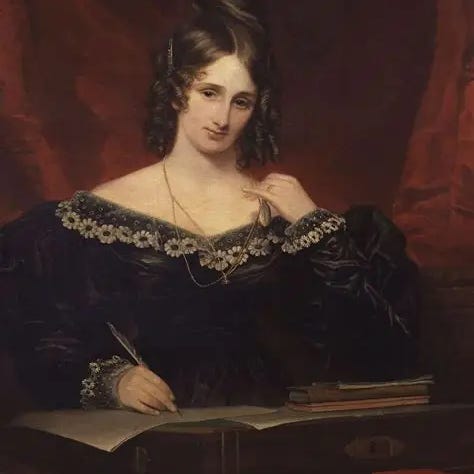
Mary’s first loss was that of her mother. Mary Wollstonecraft died soon after giving birth to her daughter. That absence left a poignant void in the young girl’s life, and one can imagine that many of Mary’s adult decisions were efforts to fill it. Her father remarried, but no stepmother could soothe that particular ache. The household brimmed with tension as she grew up among a stepmother, stepsister, and half-sister.
It’s no surprise, then, that she ran off with true love when she believed she’d found it — regardless of who it hurt, or the wounds it left on herself.
The Brontë Sisters Wrote What They Imagined
The Brontë sisters — Charlotte, Emily, and Anne — are renowned for their haunting landscapes and emotional intensity. Their fictional worlds weren’t so different from the place where they grew up. The village of Haworth was remote and often shrouded in mist, its rugged beauty finding its way into some of literature’s most memorable scenes.
Their parents nurtured an unusual degree of creativity in all their children. Around the dining table, the siblings spent countless hours inventing imaginary kingdoms, filling page after page with stories. That table still stands in the Brontë Parsonage today, a witness to one of literature’s most remarkable families.
Long before Jane Eyre, Wuthering Heights, or The Tenant of Wildfell Hall, the Brontës escaped into worlds of their own making — Glass Town, Angria, Gondal — filling tiny handmade books with stories, maps, histories. Those childhood games were an apprenticeship in imagination. The emotional landscapes they explored as children matured into the novels that secured their place in literary history.
This proves that great writers begin by writing not only what they know, but what they long to discover. If the Brontës had only “written what they knew,” what would their novels have become? Every creator passes through a season of life when they write and wander through worlds that exist only in the imagination. Youthful creativity knows no bounds: tell a child to write what they know, and they’ll instinctively reach for enchanted forests.
Children who do this are writing from what they know, but it manifests differently. It emerges not from facts of the world, but the curiosity and emotional truth that define childhood. Perhaps that’s the knowledge we’re meant to preserve as writers.
Poetry as Emotional Knowledge
Emily Dickinson was famously introverted—some neighbors claimed she hadn’t left the house in fifteen years. Some would insist a person without an “acceptable social life” can’t possibly have much to write about. Yet she penned thousands of poems, most of them published only after her death.
Would anyone say that Dickinson didn’t know what she was writing about? That because she wasn’t a social butterfly, she didn’t understand the emotions in her short, powerful pieces? She might not have witnessed everything she wrote of, but she certainly knew it.
Although Dickinson rarely traveled, her inner life was expansive. She wrote about love, grief, hope, faith, death, nature, and eternity with remarkable intensity—not because she had experienced every possible circumstance, but because she observed her own emotions with extraordinary care. She paid close attention to the invisible movements of the heart, transforming private feelings into language that has outlived generations.
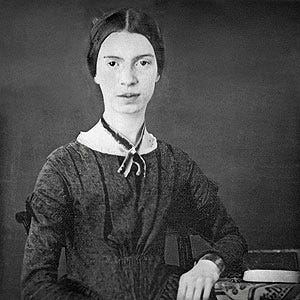
A writer can spend a lifetime in one small corner of the world and still explore vast emotional landscapes.
Dickinson’s poems prove that emotional truth does not depend upon dramatic experiences or constant novelty. Sometimes the deepest knowledge comes from looking inward with honesty until what feels personal becomes universal.
Conclusion
What, then, does it mean to know something — and how do we become qualified enough to write about it?
Maybe the answer is that knowing was never about the passport stamps or the social calendar. Shelley knew grief before she knew the world. Dickinson knew longing without ever needing to leave a room. The Brontës knew ambition and wonder before they knew adulthood. What they shared wasn’t experience in the conventional sense — it was attention. They paid close attention to what they felt, and they had the courage to put it on the page honestly.
So write what you know. But let “know” mean something larger than what you’ve lived. Let it include what you’ve felt, feared, wondered, and imagined hard enough to believe. That kind of knowing doesn’t limit a writer — it’s the only kind that has ever produced work that lasts.
My most successful writing has come from the deepest parts of me... under the guise of my characters.
this essay is lovely. you describe perfectly what “writing what you know” truly means; writing not only our experiences in the physical world, but also into the spiritual, hidden world. emily dickinson is the best example of this. loved it.