

The Homing Instinct of Books
Reflections on Modern Classics and the Magic of Books

Anecdote on Classic Novels
We have all heard of the old classics, such as Wuthering Heights and Emma, that every enthusiastic member of the literary community knows and has read. They possess a timelessness—an ability to connect with new readers—that enables them to survive the passing of time.
If we pay attention, we begin to notice signs of that same longevity in books written in our lifetime. It is not enough for a book to have made it onto the New York Times Bestseller list; for a modern novel to be considered a classic, it must endure long after that.
The sentiments expressed by its characters must feel familiar to readers. Quotes from its pages must cause listeners to nod knowingly—“Yes, that might well have been written by my own hand.”
For a modern novel to become a classic, it is not enough for the tale to enrapture readers. It must also echo their loves and fears—generation after generation. Love, fear, longing—these emotions are universal to the human condition.
They are timeless.
Now, to Modern Classics
The Guernsey Literary and Potato Peel Pie Society by Mary Ann Shaffer and Annie Barrows, to me, passed those tests.
I had seen copies of it for years before settling down to read it. It kept returning to me: several times, I spotted used paperbacks at thrift stores. In the end, it was at a thrift store that I acquired my own copy. I was delighted to discover that it had been well loved; the previous owner had annotated it.
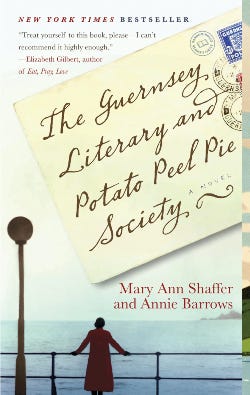
Guernsey did not appear only at thrift shops, though. I also found it on the shelf of an elderly family member whose literary taste I respect. Both avid readers, we broached the subject of our favorite novels. She mentioned it almost immediately and then showed me her copy. Hers, too, was annotated; she had underlined her favorite passages.
Most intimately of all, my late grandmother is said to have read this book. I asked my aunt, her daughter, which books Grandma had enjoyed. There is no better way to connect with family than by reading what they read. The only novel my aunt remembered Grandma having read was The Guernsey Literary and Potato Peel Pie Society.
First, It Rejected Me
When I opened Guernsey for the first time, I was thrown off by its format. Novels composed entirely of letters are a pet peeve of mine, as I struggle to keep track of who wrote what and when.
As a result, I gave up on Guernsey the first time—but I knew I could not quit entirely. There had to be something I was missing. If so many people I respected had enjoyed this novel, there had to be something to it.
As is the case with many books, it wasn’t necessarily bad simply because I couldn’t get through it on my first attempt. What I needed to do was humble myself and wait for the book to choose me.
I replaced my copy on the shelf and waited.
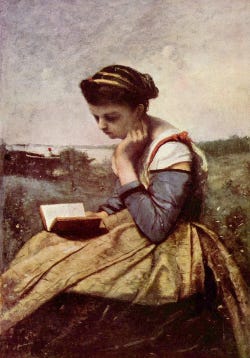
As a lover of books, I know that the best novels choose when they wish to be read. Books written with soul reach such a level of enchantment that they seem to possess minds and wills of their own. No, they might say, you shall not enjoy my paragraphs and sentences on this day.
When that happens, there is nothing for us to do but wait to be chosen.
Then, the Novel Chose Me
I waited for a little over a year until, two weeks ago, I sensed that Guernsey had picked me. I cannot fully explain what it is like to be chosen by a book. It is as if a soft voice in my heart beckons, encouraging me to reach for it.
You’ll understand this time, the voice says. You’re ready for the messages I have to share. All dedicated readers know this voice.
I reached once more for Guernsey, my heart skipping with excitement. What a wonderful novel with which to end the month of February.
As I turned the pages, it did not feel as though I were reading the same book that had first rejected me. The letter format no longer confused me; I was able to follow the plot. I understood who the main character was, what profession she had chosen, and the nature of her conflicts.

I learned that the heroine, Juliet Ashton, became famous during the war for her column written under the pseudonym Izzy Bickerstaff. After the war ended, she longed to be known for something else. She wanted to begin a new writing project, though she did not yet know what it would be.
As she sat brainstorming and steeping in thought, a letter arrived from Mr. Dawsey Adams. He wrote from the mysterious island of Guernsey, and with his letter came a barrage of ideas.
So the adventure began—but was it an adventure for Juliet, or for me?
The Real Heart of Guernsey
Without delving into the novel’s post-war details, I appreciated how beautifully it captured the sensation of being a reader. The opening chapters make clear that this is a book about books—for people who love books.
No wonder it refused to be read on my timing.
This book was written by clever women who understand “the rules,” as seen in lines such as:
“Reading good books ruins you for enjoying bad books.”
“Perhaps there is some secret sort of homing instinct in books that brings them to their perfect readers. How delightful if that were true.”
A secret sort of homing instinct.
It all makes sense, then. The same instinct that directs books to the readers who need them may also decide when they will be picked up and enjoyed. Books are not mere forms of entertainment but powerful forces that ought to be respected.
I have encountered this concept in other novels, but here it felt especially poignant.
A Book Club Is No Small Matter
The Society was formed by neighbors on the island of Guernsey during the years of Nazi occupation. While their world was falling to pieces and friends were disappearing, residents grew desperate for escape.
They craved a reminder that somewhere, goodness still existed.
The Guernsey Literary and Potato Peel Pie Society became more than a book club. It was vital to the emotional and spiritual well-being of its members. People joined who were not normally “bookish.” Humorous stories are shared of unconventional texts read aloud during meetings—a cookbook, even a series of letters purportedly written by Oscar Wilde.

Within this club, members formed a family whose bonds were strong and resilient. Together, they endured the hardships of war and grief. They were united by the act of hearing books read aloud and by choosing one another’s presence again and again, despite their differences.
The Society gave many of these islanders the strength to continue living. Such is the power of books.
Literature—the written word—is powerful. In desperate times, a good story lifts spirits and restores morale. Where there is a good story, there is hope. That is the lesson I carried with me when I finally finished this novel.
Conclusion
Today, book clubs still exist. A quick scroll on Substack reveals the many options available. Groups are reading The Iliad as well as Wuthering Heights. They seek the bond formed when a story is experienced together.
Sadly, in-person book clubs do not seem as common. I long to find my own Guernsey club. I have considered forming one, though the idea feels ambitious in our digital age. Fortunately, books transcend distance. A reader in Idaho may discover the same truth in a novel as someone reading it in the UK.
Are you a member of a book club? I am not—yet—but I am strongly considering starting one. Though many already exist, there can never be too many life-giving societies like the Guernsey.
Books provide the perfect bond, a cure for boredom, and a way to explore the world without leaving our seats. We must remember, however, as we reach for a book, that it may need to be read in its own timing—not ours.
As Stephen King has said, books are a uniquely portable form of magic. Because they are magic, we cannot simply grab them. Because they are magic, they deserve our respect.
What am I reading in the month of March? Perhaps you can pick one of these books, and we can form our own book club!
I LOVED "The Guernsey Literary and Potato Peel Pie Society." I too was put off by the format but once I dove in I couldn't put it down. Perhaps I should no longer say I dislike epistolary novel because I just finished "The Correspondent" too and found it so poignant.
I totally agree, I used to think of it as, I am not grown up enough for the book yet. But I love thinking
that the the book chooses you <3